Building software from scratch is expensive, time-consuming, and, honestly, unnecessary for most businesses at present. That’s why so many companies are skipping the long development cycles and going straight to white label software instead.
And the numbers back this up!
73% of businesses now incorporate white label solutions into their workflow, and it’s easy to see why. The global software market is projected to hit $1,789.67 billion by 2034, growing at a CAGR of 11.8%, and white labeling is a huge part of that story.
Whether you’re a startup trying to launch fast or an agency looking to expand your service offerings, white label software might just be your smartest shortcut.
But wait, what exactly does white label software mean? Let’s break it down.
What is white label software?
White label software is a ready-made product built by one company that other businesses can purchase, rebrand, and resell as their own.
Think of it like buying a plain t-shirt from a manufacturer and sewing your own label on it. The product is the same, but it carries your brand’s identity.
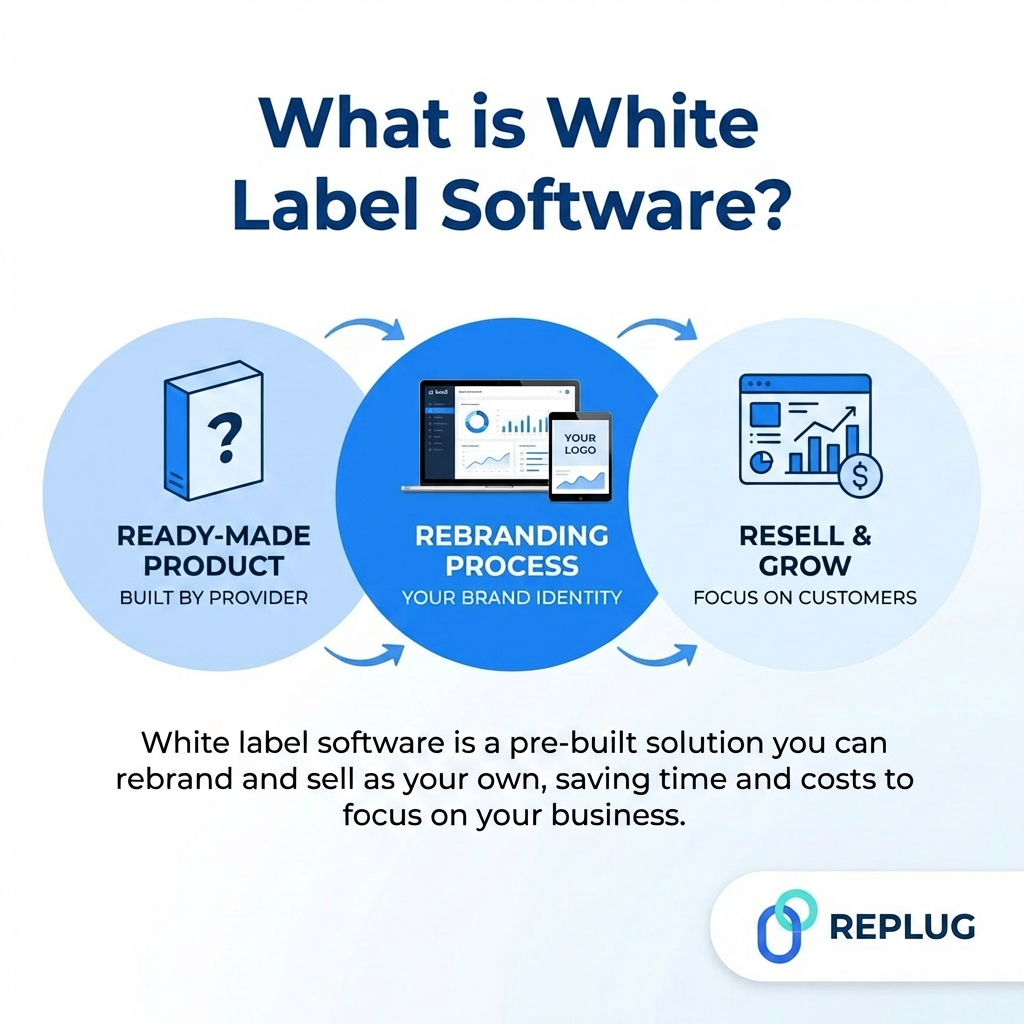
The primary objective is simple: Let businesses skip the costly, time-heavy process of building software from the ground up, and instead focus on what they do best, i.e., selling, growing, and serving their customers.
Key aspects of a white label software
Mentioned are the core elements of a white label software:
- Custom branding & rebranding
One of the biggest draws of white label software is that you can make it look and feel completely like your own product.
You can apply your logo on it, match it to your brand colors, and even give it a custom domain name. Your customers won’t have any idea someone else built it, and that’s exactly the point.
- No-code/fast deployment
You don’t need a dedicated team of developers to get white label software up and running. Most solutions are built for quick setup, meaning you can go from purchase to launch in days rather than months.
This is a massive win for businesses that need to move fast and can’t afford to wait on lengthy development cycles.
- Reliable maintenance & support
When something breaks or needs an update, that’s the original vendor’s job (not yours). The software provider handles all the technical maintenance, bug fixes, and platform updates in the background. You get a smooth-running product without having to manage the messy technical side of things.
- Scalability & performance
As your business grows, your software should keep up optimally. Good white label solutions are built to scale, meaning they can handle more users, more data, and more demand without falling apart. You won’t need to rebuild or switch platforms every time your customer base doubles.
- Cost-effectiveness
Building software from scratch can cost anywhere from tens of thousands to millions of dollars. White label software cuts that down drastically.
You’re essentially splitting the development cost with every other business using the same platform, which means you get a polished, fully functional product at a fraction of the price.
- Built-in security & compliance
Reputable white label providers invest heavily in keeping their platforms secure and compliant with industry standards like GDPR, SOC 2, or HIPAA (depending on the industry).
This means you’re not starting from zero on security. You’re actually inheriting a system that’s already been tested and solidified.
- Integration capabilities
White label software doesn’t have to live in a silo. Most modern solutions are built to connect with the tools you’re already using, no matter if that’s a CRM, payment gateway, analytics platform, or anything else. Good integration support means your tech stack stays connected and your workflows stay smooth.
How does a white label software work?
White label software follows a pretty straightforward process. One company builds it, another company brands it, and the end customer uses it without ever knowing who originally developed it. It’s a three-way relationship that benefits everyone involved.
Here’s how the whole thing plays out, step by step!
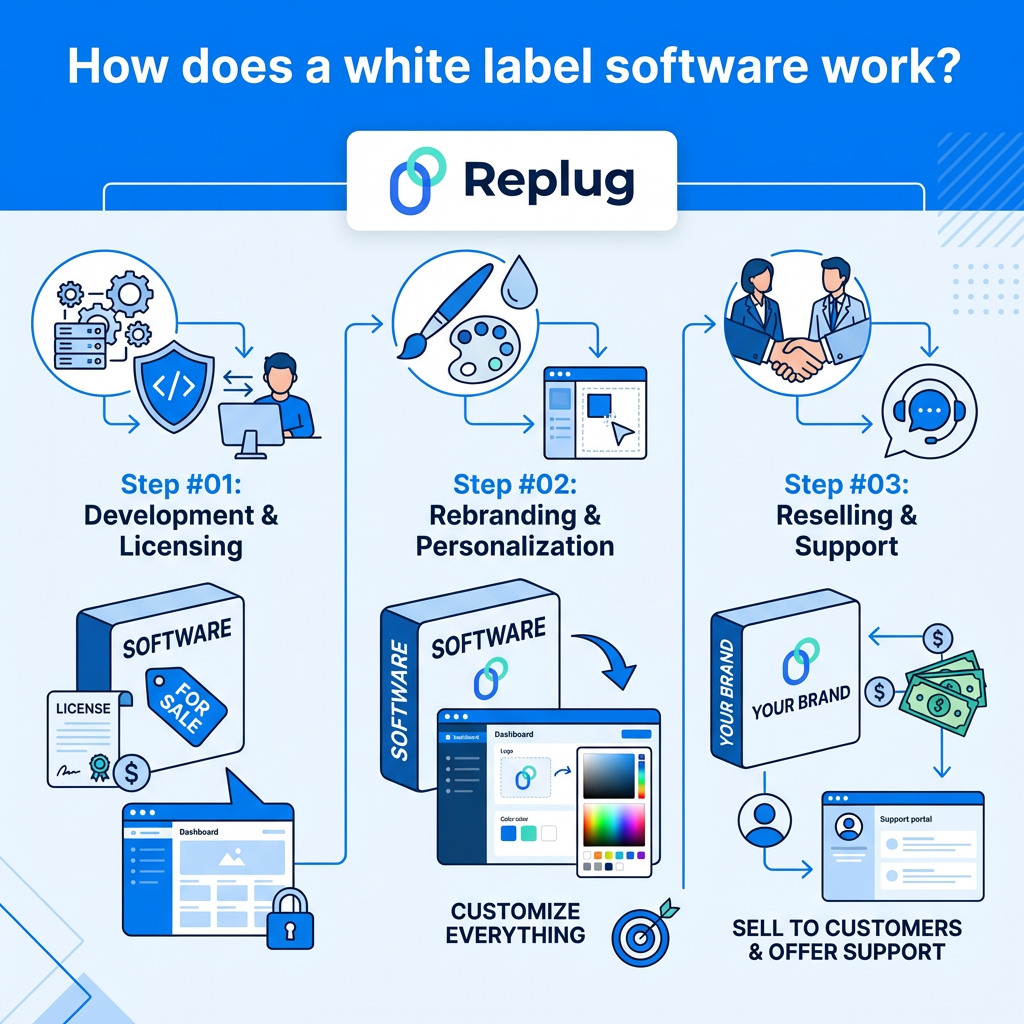
Step #01: Development & licensing
It all starts with a software development company that builds a fully functional product, whether that’s a project management tool, a marketing platform, a chatbot, or anything else. Instead of selling it directly to end users under their own brand, they license it out to other businesses.
This licensing model is what makes the whole thing tick.
The original developer gets a steady stream of revenue without having to do any marketing or sales themselves. And the businesses buying the license get a ready-to-go product without spending a single dollar on development. It’s a win-win right from the start.
Step #02: Rebranding & personalization
Once a business licenses the software, the next step is making it their own. This is where the actual “white label” magic happens.
The purchasing company can add its unique logo, apply its brand colors, set up a custom domain, and sometimes even customize certain features to better fit their specific audience.
The goal here is to make the software feel like something the business built in-house. By the time it reaches the end customer, there’s no trace of the original developer; just a clean, branded product that looks like it belongs to the company selling it.
Step #03: Reselling & support
With the software rebranded and ready to go, the business can now sell it to its own customers, either as a standalone product or bundled into a larger service offering. This is where the real money-making potential kicks in.
As for support, responsibilities are typically split.
The original vendor handles the backend stuff, like server maintenance, security updates, bug fixes, and platform upgrades. Whereas the reselling business, on the other hand, takes care of customer-facing support, ie.e, answering questions, onboarding new users, and managing relationships. It’s a clean division that keeps things running smoothly on both ends.
Different types of white label software
White label software isn’t a one-size-fits-all kind of thing; it spans almost every industry you can think of.
No matter if you’re running a marketing agency, a startup, or an e-commerce store, there’s likely a white label solution built for exactly what you need.
Here’s a breakdown of the most common types!
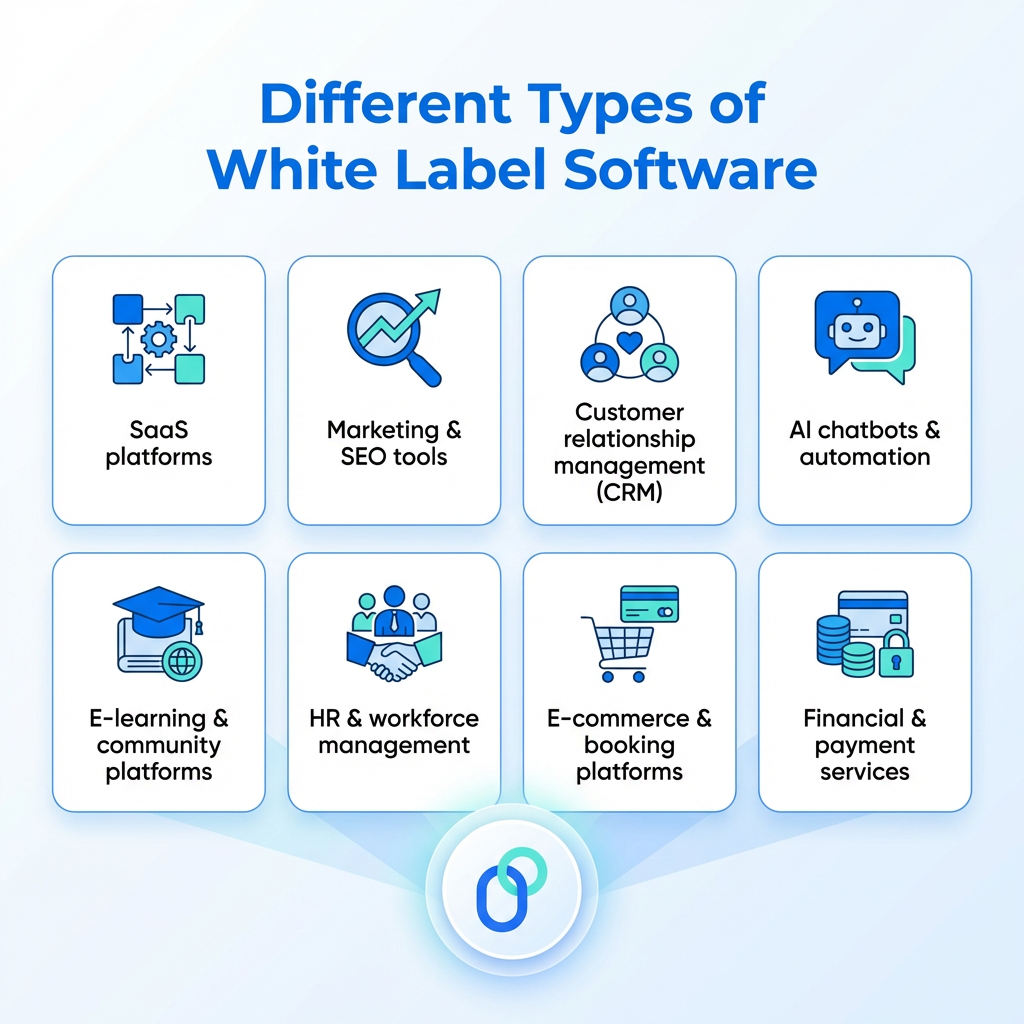
SaaS platforms
White label SaaS platforms are cloud-based tools that businesses can rebrand and resell under their own name. These are incredibly popular because they require zero infrastructure setup. You simply license the platform, brand it, and start offering it to your customers right away.
Marketing & SEO tools
From social media schedulers to SEO audit tools and email marketing platforms, white label marketing software lets agencies offer powerful tools to their clients on the go. It’s a great way for agencies to expand their service offerings and create an additional revenue stream.
Customer relationship management (CRM)
White label CRM software lets businesses manage leads, track customer interactions, and handle sales pipelines, all under their own personalized brand. Instead of pointing clients toward a third-party tool, companies can offer a fully branded CRM experience that feels native to their ecosystem.
AI chatbots & automation
This is one of the fastest-growing categories right now. White label AI chatbot platforms allow businesses to deploy smart, conversational bots on their websites or apps without any AI development expertise. You get all the functionality of a powerful automation tool, branded entirely as your own, without any hassle.
E-learning & community platforms
Businesses in the education, coaching, or community space can use white label e-learning platforms to host courses, manage memberships, and build engaged communities. It saves months of development time and lets creators focus on content rather than tech.
HR & workforce management
White label HR tools cover everything from employee onboarding and payroll management to performance tracking and leave management. HR consultancies and staffing agencies especially love these because they can offer clients a complete branded HR solution without the overhead of building one.
E-commerce & booking platforms
Whether it’s an online store or an appointment booking system, white label e-commerce and booking platforms are a go-to for businesses that want to get up and running fast. Agencies building solutions for retail or service-based clients can deliver polished, fully functional platforms in a fraction of the usual time.
Financial & payment services
White label fintech solutions include payment gateways, digital wallets, invoicing tools, and even banking platforms. These are particularly popular among startups and businesses in the financial space that want to offer seamless payment experiences without dealing with the complexities of building financial infrastructure from scratch.
Major benefits of white label software
White label software isn’t just a shortcut; it’s a genuinely smart business move. It opens up opportunities that would otherwise take years and significant investment to build.
Here are the biggest advantages that make it such an attractive option for businesses of all sizes.
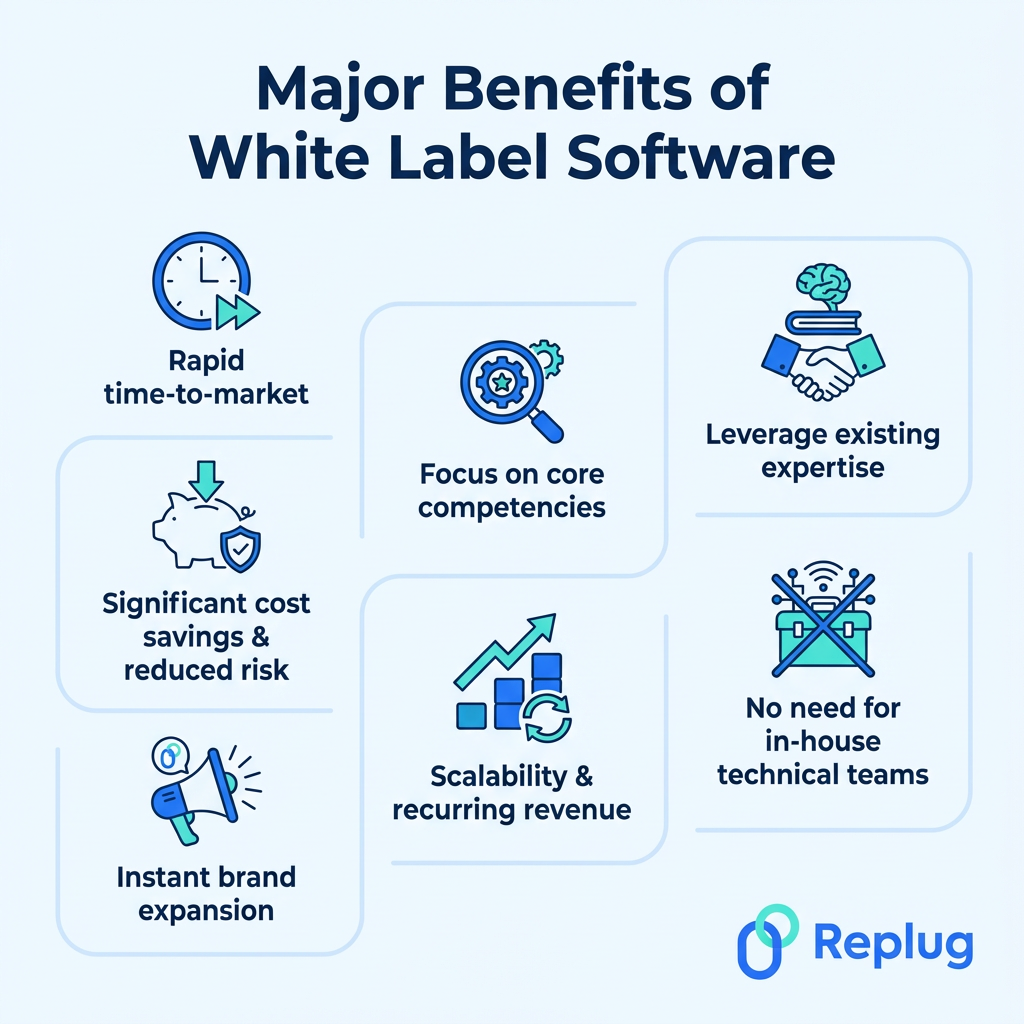
Rapid time-to-market
With white label software, you’re not starting from zero. The product is already built, tested, and ready to go. This means you can launch in days or weeks instead of months or years. In competitive markets, that kind of speed can make all the difference.
Significant cost savings & reduced risk
Building software in-house comes with a heavy price tag. Developer salaries, infrastructure costs, testing, maintenance, and the very real risk that the product might not work out. White label software eliminates most of that financial risk upfront, letting you invest your budget where it actually matters.
Instant brand expansion
White label software lets you add new products and services to your portfolio almost overnight. Instead of spending years developing a new offering, you can license a ready-made solution, put your brand on it, and start selling right away. This lets you expand what your business offers without the usual growing pains.
Focus on core competencies
Your team’s time and energy are best spent on what your business does best. White label software takes the technical heavy lifting off your plate. This allows you to stay focused on sales, customer relationships, strategy, and growth, rather than getting buried in development and maintenance tasks.
Scalability & recurring revenue
Most white label software operates on a subscription model, which means predictable, recurring revenue as your customer base grows. And because the underlying infrastructure is already built to scale, you don’t have to worry about the platform struggling to keep up as your business expands.
Leverage existing expertise
The vendor who built the software has already spent years refining it, fixing bugs, and improving performance based on real user feedback. When you white label their product, you’re essentially inheriting all of that expertise and experience, without having to go through the same trial and error yourself. Seriously, a huge relief!
No need for in-house technical teams
Hiring and managing a full technical team is pretty expensive and time-consuming. With white label software, the vendor handles all the backend technical work (updates, security patches, server management, and more). You get a fully functioning product without needing a single developer on your payroll.
Top 10 white label software for sales agencies & resellers in 2026
If you’re a sales agency or reseller looking for the best white label software examples & solutions on the market, you’re in the right place.
No matter if you need help with outreach, reporting, social media, or CRM, there’s a white label marketing tool out there built exactly for your use case.
Here are 10 of the best ones worth your attention in 2026!
1. Replug (Link management platform)
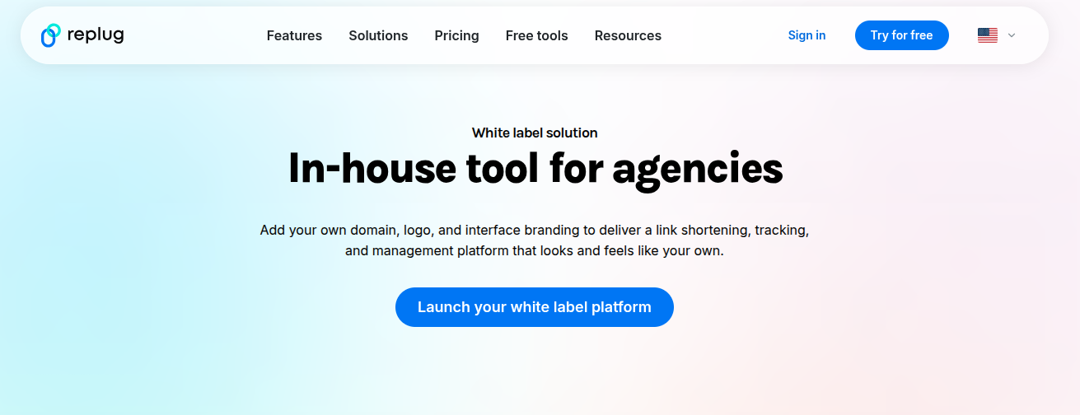
Replug is essentially a complete link optimization and tracking platform that you can present to clients as entirely your own. Marketers rate Replug ⭐⭐⭐⭐⭐ for its simplicity, reliability, and powerful link management features.
This makes it a solid pick for agencies that want to offer branded short links, retargeting pixels, bio links, and deep analytics without building anything from scratch.
Replug’s “Agency” plan offers agencies full white label access to custom domains, logos, dashboards, reports, and emails, all under their own identity.
2. GoHighLevel (CRM & funnels)

GoHighLevel is one of the most popular all-in-one platforms for marketing agencies, and its white label capabilities are a big reason why.
Agencies can fully rebrand the platform with their own custom logos, domains, and dashboards, then resell it as their own funnel software. This helps create recurring revenue without building from scratch.
It includes CRM, sales funnels, marketing automation, booking, a drag-and-drop website builder, AI appointment bots, lead nurturing, and analytics, all in one platform, ready for your agency’s branding.
3. Vendasta (Marketing suite)
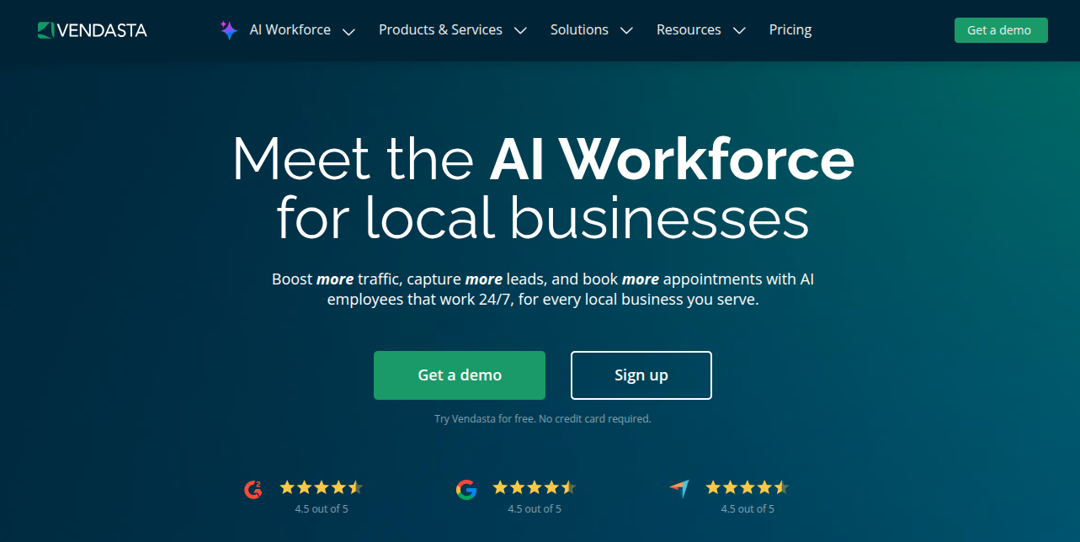
Vendasta is a powerhouse for agencies looking to expand their digital service offerings fast. It gives you access to a massive marketplace of 250+ rebrandable SaaS products and services.
From email marketing to PPC management, along with a white label CRM and client portal where customers can manage their marketing, view reports, and request services, hassle-free.
If you want to become a one-stop shop for your clients without hiring a huge team, Vendasta makes it surprisingly straightforward.
4. DashClicks (Fulfillment platform)
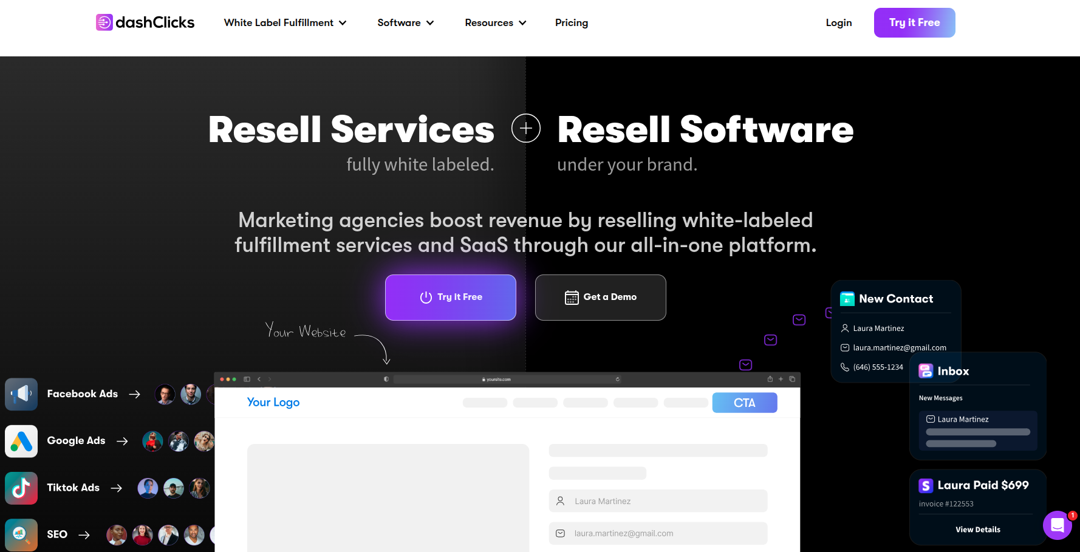
DashClicks is built with agencies in mind, combining a slick client-facing dashboard with a suite of white label fulfillment services.
It includes built-in marketing tools for SEO audits, Facebook ad reporting, lead management, and reputation tracking. In addition, you can add your personalized logo, your domain, and your unique colors so it looks like you built the entire platform from scratch.
It’s especially popular among newer agencies that want a polished, all-in-one client experience without the operational overhead.
5. AgencyAnalytics (Reporting)
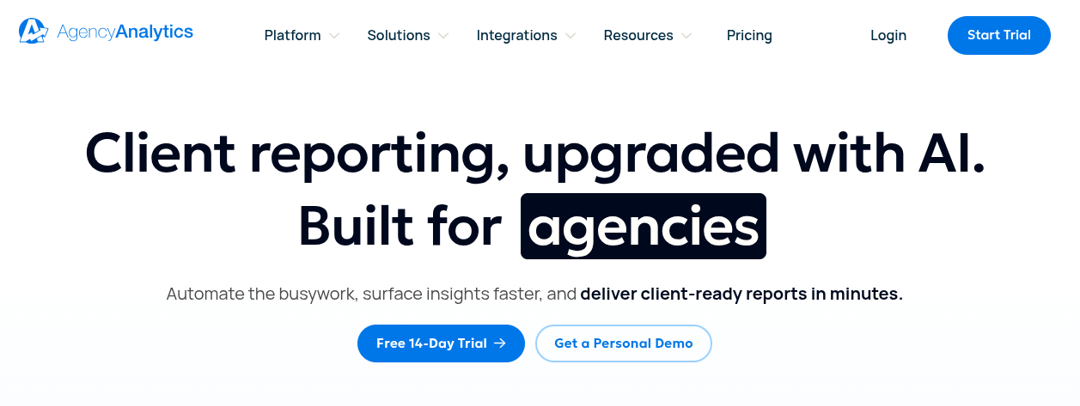
If client reporting is a pain point for your agency, AgencyAnalytics is the ultimate fix. It pulls data from Meta Ads, Google Ads, Google Analytics, SEO tools, and 80+ other platforms into one fully white-labeled dashboard.
This data is complete with your custom domain, branding, and client portals under your agency name. You can even set up automated reports on a schedule, so your clients always feel informed and your team spends less time building decks manually.
6. Infraforge (Cold email)
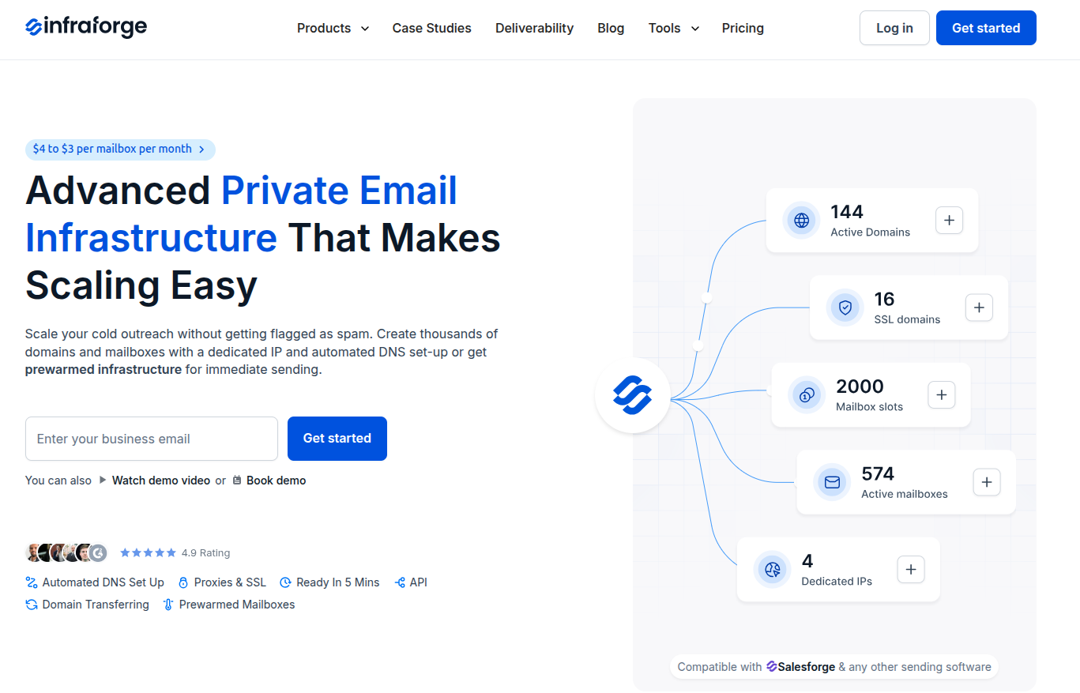
Infraforge/Salesforge are two complementary tools from the same ecosystem, and together they make a formidable white label cold email stack.
Salesforge Whitelabel lets agencies rebrand the full outreach platform, including email automation, AI personalization, and client workspace management.
On the other hand, Infraforge lets you resell the actual email infrastructure, including dedicated IPs, domain setup, and automated DNS configuration.
It’s a great option for agencies that want to own the entire cold outreach experience under their own brand.
7. ContentStudio (Social media)
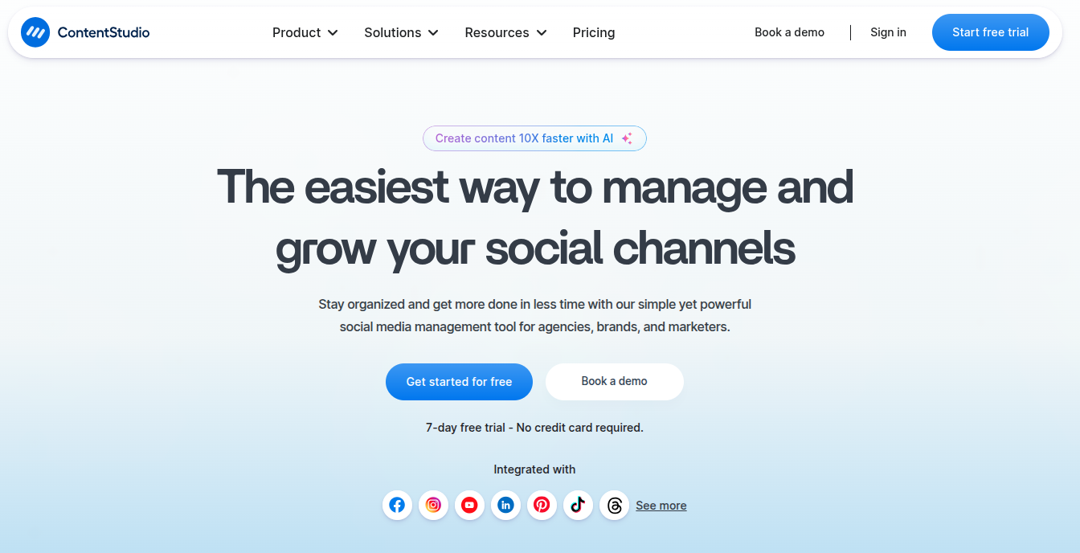
ContentStudio is a go-to choice for agencies managing social media across multiple clients. It includes a white label dashboard and branded reports, letting you replace the provider’s branding with your own.
It offers key features like bulk scheduling, multi-account management, a unified social inbox, and analytics designed for agency workflows.
What’s the best part?
It’s budget-friendly, easy to use, and built with the kind of multi-client setup that agencies actually need day-to-day.
8. BotPenguin (AI automation)

BotPenguin is a strong pick for agencies looking to ride the AI wave and offer chatbot automation under their own brand.
The platform lets you deploy intelligent AI agents on WhatsApp, Instagram, Facebook, and websites. Plus, it provides the ability to set up custom pricing plans, manage client subscriptions, and track agent usage, all from one branded dashboard.
You can power your agents using leading AI models and train them on client-specific data for smarter, more contextual conversations.
9. Duda (Web design)
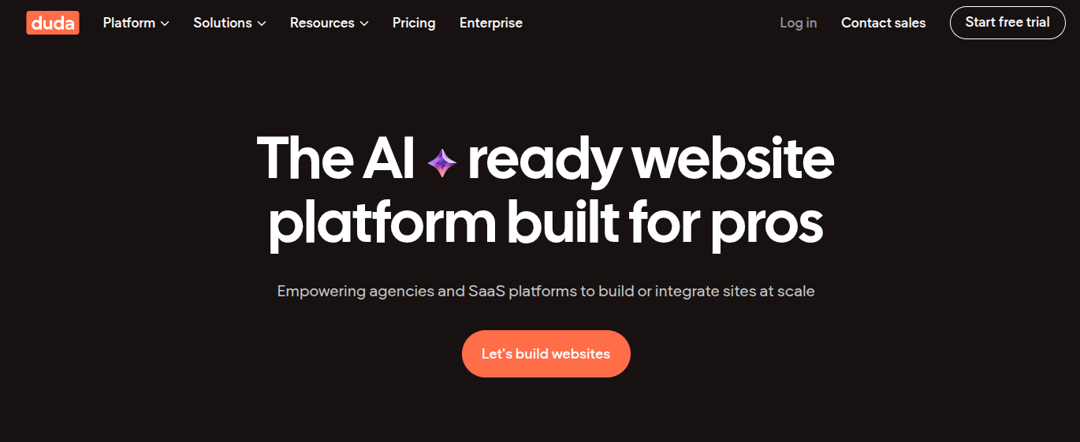
Duda is a website builder purpose-built for agencies and SaaS providers, and its white label offering is genuinely impressive.
It includes branded editors, custom domains for client logins, white-labeled notifications, and branded support portals. This is so that agencies can present Duda as their own website platform rather than a third-party builder.
It’s particularly well-suited for web design agencies that want to launch multiple client websites quickly while keeping everything under their own brand.
10. ConnectPOS (POS system)
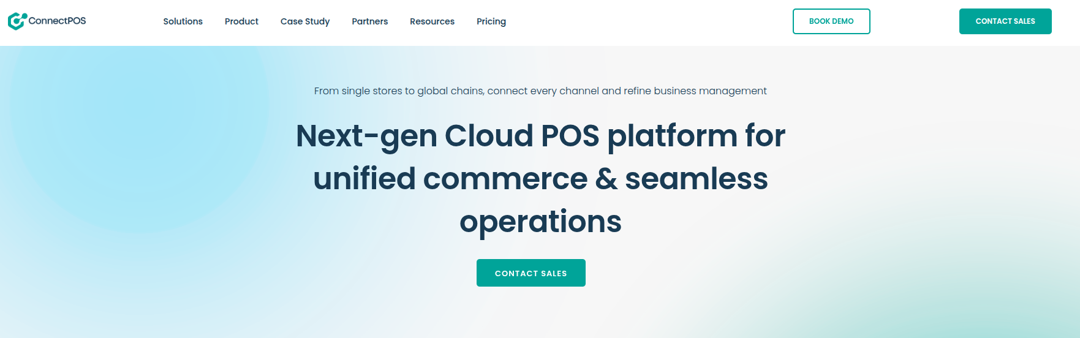
ConnectPOS is the go-to option for agencies and resellers targeting the retail space. It integrates online and offline transactions seamlessly.
This amazing platform ensures businesses can provide a unified shopping experience with real-time synchronization between online and offline stores.
Moreover, integrations with major e-commerce platforms like Shopify, WooCommerce, Magento, etc. are even more effortless.
Resellers can fully rebrand the platform and offer it to retail clients as their own POS solution, all while ConnectPOS handles the backend maintenance and updates.
Related:14 Best white label marketing tools for agencies in 2026
How to sell a white label software?
Selling white label software isn’t just about placing your logo on a product and hoping for the best. There’s a proper process behind it, and when done right, it can become a seriously profitable revenue stream for your business.
Here are the steps to successfully sell white label software:
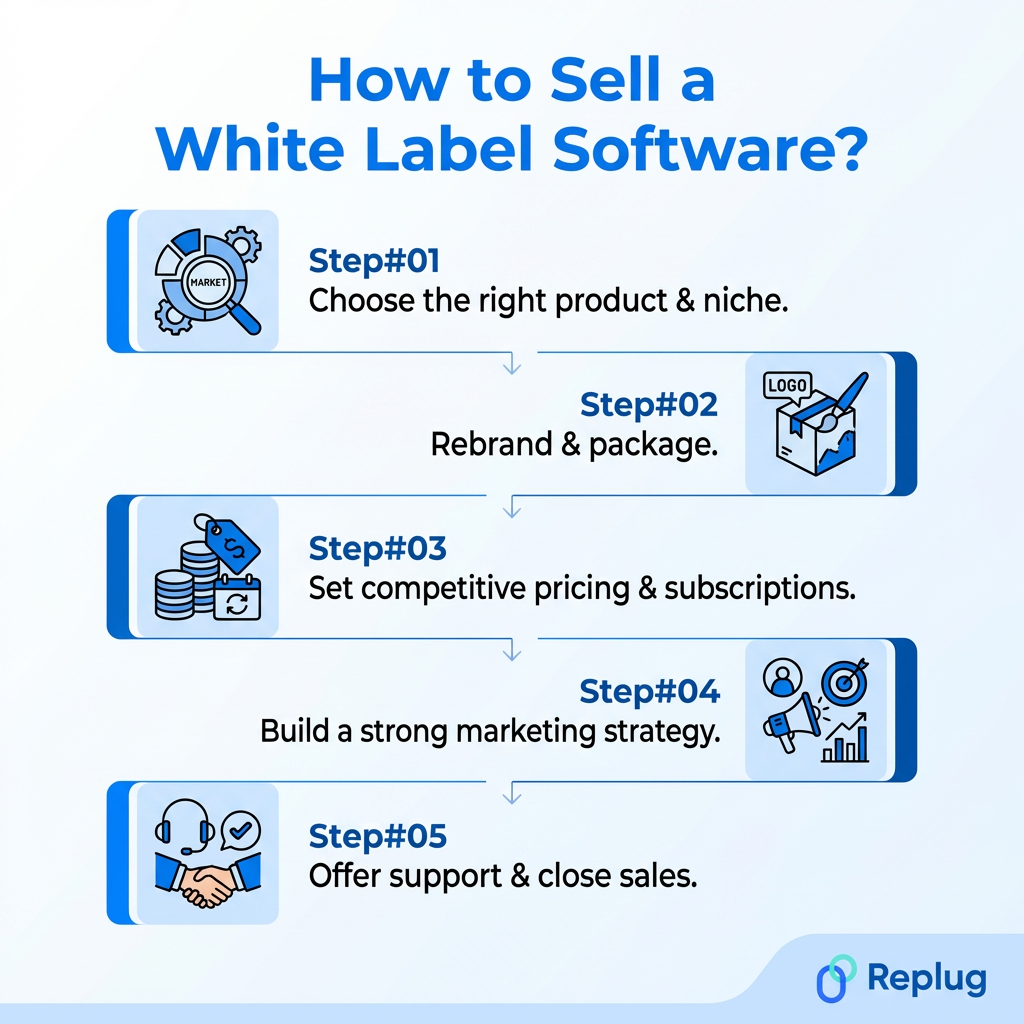
Step#01: Choose the right product & niche
Before anything else, you need to figure out what you’re selling and who you’re selling it to. The biggest mistake most resellers make is picking a product that’s too broad or doesn’t solve a clear, specific problem.
Take your time and think about your target audience. Are they marketing agencies, small retailers, HR teams, or e-commerce businesses?
Once you know your niche, find a white label product that directly addresses their biggest pain points. Always remember, a focused niche always outperforms a generic one!
Step#02: Rebrand & package
Once you’ve picked your product, it’s time to make it yours. Add your logo, set up a custom domain, align the color scheme with your brand identity, and craft messaging that speaks directly to your audience.
But don’t stop at just visuals; packaging matters too. Think about how you want to bundle the product. Will you offer different tiers? Include onboarding support? Pair it with additional services?
Note: The way you present and package the software can be just as important as the product itself.
Step#03: Set competitive pricing & subscriptions
This is the most important step, as pricing can make or break your sales. You want to charge enough to make a healthy margin, but not so much that potential customers bounce straight to a competitor.
Research what similar tools in your niche are charging and position yourself accordingly. Subscription-based pricing tends to work best for software because it creates predictable, recurring revenue and lowers the barrier to entry for new customers.
Helpful tip: Offering a free trial or a starter plan can also help get people through the door faster.
Step#04: Build a strong marketing strategy
A great product with no visibility won’t sell itself. You need a clear plan to get in front of the right people.
This could include content marketing, SEO, paid ads, LinkedIn outreach, email campaigns, or even partnerships with complementary service providers.
Focus on communicating the value your software delivers (not just its features). Case studies, testimonials, and demo videos are especially effective for software sales because they show real outcomes rather than just making promises.
Step#05: Offer support & close sales
Here’s where a lot of resellers make a mistake. They invest all their energy in getting leads but forget about the experience after the sale.
Offering solid onboarding, responsive customer support, and regular check-ins builds trust and dramatically improves retention.
On the sales side, don’t be afraid to take on calls, offer live demos, and address objections head-on. People buy software from businesses they trust, so the more confidence and support you project, the easier the close becomes.
How to choose the right white label software (selection criteria)
Not all white label softwares are created equal, and picking the wrong one can cost you clients, reputation, and money in the long run. Before you commit to any platform, here are the key factors you should be evaluating:
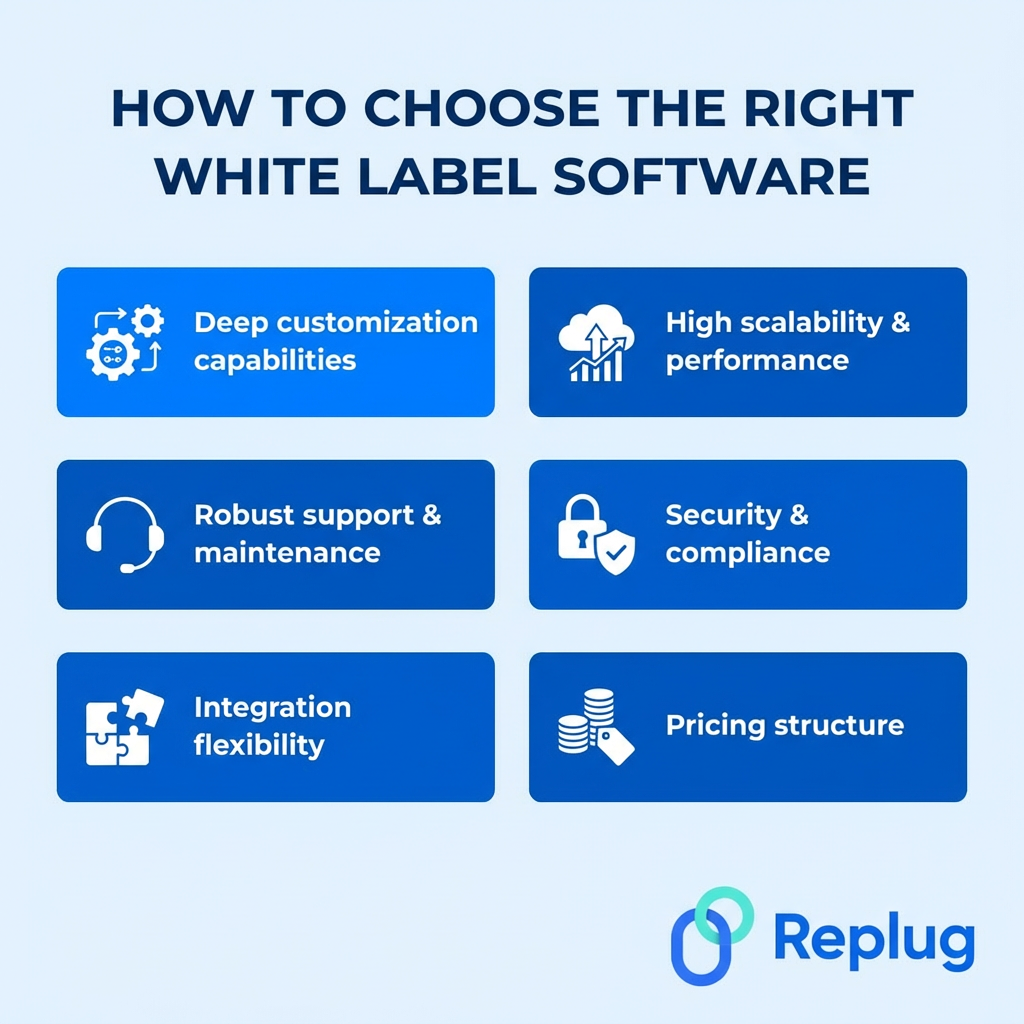
Deep customization capabilities
The whole point of white label software is to make it look and feel like your own personal product. So if a platform only lets you swap out a logo, that’s a red flag.
Look for solutions that offer custom domains, branded dashboards, personalized client portals, and flexible UI adjustments. The offerings must be at least enough to make it genuinely unrecognizable from the original vendor’s product.
High scalability & performance
Your software needs to grow with you, not against you. Make sure the platform can comfortably handle an increasing number of users, higher data loads, and growing client demand without slowing down or crashing.
Ask vendors directly about their uptime guarantees and how the platform performs under heavy usage. These are questions worth asking before you sign anything.
Robust support & maintenance
When something goes wrong (and at some point, it will), you need a vendor who actually shows up. Look for platforms that offer 24/7 reliable, responsive support through multiple channels like live chat, email, or a dedicated account manager.
Regular product updates and a clear maintenance schedule are also good signs that the vendor is actively invested in keeping the platform running smoothly.
Security & compliance
If your clients are trusting you with their data, you need to trust your vendor with it too. Make sure the platform meets the relevant security and compliance standards for your industry, whether that’s GDPR, SOC 2, HIPAA, or something else.
Don’t just take their word for it; ask for documentation and certifications to back it up.
Integration flexibility
The software you pick shouldn’t exist in isolation. It needs to play nicely with the other tools your clients are already using (CRMs, payment gateways, analytics platforms, email tools, and so on).
Prioritize platforms that offer strong API access and pre-built integrations, because the more connected your stack is, the smoother everything runs.
Pricing structure
Make sure the pricing actually makes sense for your business model before committing. Some vendors charge a flat monthly fee, others take a revenue share, and some charge per user or per client.
Critically evaluate the numbers and make sure there’s enough margin left for you to price competitively and still turn a healthy profit.
Also, watch out for hidden fees around onboarding, extra features, or scaling. Those can quietly eat into your margins fast.
Mistakes to avoid when white-labelling software
White labelling software can be incredibly rewarding, but only if you go in with your eyes open. There are some pretty common pitfalls that trip up even experienced resellers, and knowing them upfront can save you a lot of headaches down the road.
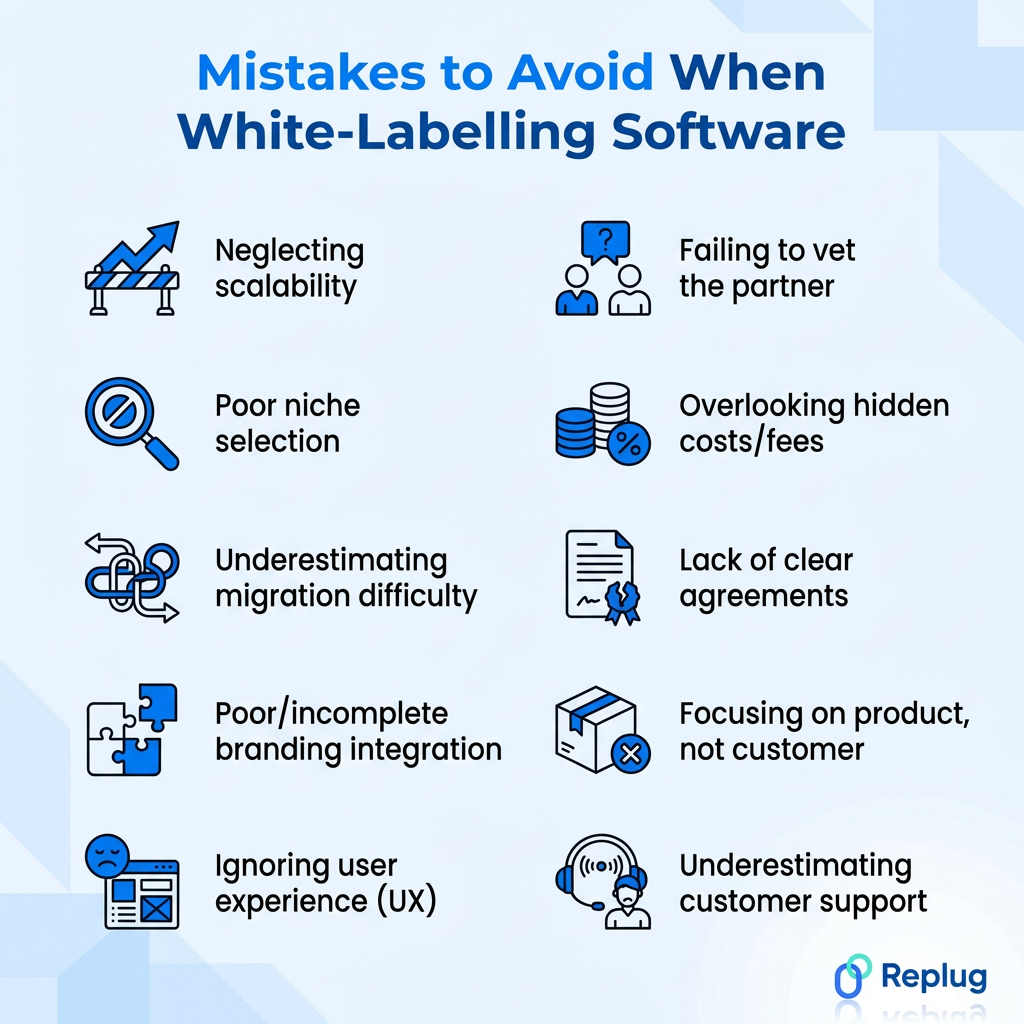
Neglecting scalability
A platform that works fine with 10 clients can completely fall apart at 100. Always think ahead and make sure the software you choose is built to handle growth before you actually need it to.
Failing to vet the partner
Your vendor’s reliability directly reflects on your brand. Before signing anything, step into their track record, read reviews, check their uptime history, and make sure they’re a company you can actually trust for the long haul.
Poor niche selection
Trying to sell to everyone usually means selling to no one. Picking a niche that’s too broad, too saturated, or simply not the right fit for the product you’re reselling is one of the fastest ways to struggle with sales from day one.
Overlooking hidden costs/fees
The base license price is rarely the full picture. Watch out for extra charges tied to additional users, premium features, onboarding, API access, or scaling. These can quietly stack up and seriously squeeze your profit margins.
Lack of clear agreements
Handshake deals aren’t the ideal choice in white labelling. Make sure your contract with the vendor clearly outlines ownership rights, data handling, SLAs, termination clauses, and what happens if they decide to discontinue the product.
Poor/incomplete branding integration
Half-baked branding kills credibility fast. If your logo sits next to the original vendor’s name somewhere in the UI, or the color scheme doesn’t quite match, clients will notice. This will instantly undermine the trust you’re trying to build.
Focusing on product, not customer
Getting too caught up in the software’s features and forgetting about the actual problems your customers need solved is a common trap. At the end of the day, people don’t buy software; they buy outcomes, so always lead with value, not specs.
Ignoring user experience (UX)
A messy, confusing interface will frustrate your clients and drive them straight to a competitor. Before committing to any platform, test the UX thoroughly. If it’s not intuitive and smooth for you, it won’t be for your customers either.
Underestimating customer support
Even the best software comes with questions, issues, and annoyed users. If you haven’t planned for how you’ll handle response times, knowledge bases, and escalation paths, you’ll quickly find yourself overburdened. You’ll end up losing clients over problems that could have been easily managed.
White label vs private label: Key differences explained!
People often use these two terms interchangeably, but they’re actually quite different, and picking the wrong model for your business can cost you.
Here’s a clear breakdown of how they stack up against each other.
| Comparison point | White label | Private label |
| Exclusivity | Non-exclusive — the same product is sold to multiple businesses | Exclusive — the product is made solely for one brand |
| Customization | Limited to branding (logo, colors, domain) | Deep customization — product specs, features, and design can all be tailored |
| Startup cost | Low — you’re sharing development costs with other resellers | Higher — you’re funding a more custom, dedicated build |
| Time to market | Very fast — product is already built and ready to deploy | Slower — requires more development and setup time |
| Control | Limited — vendor controls the core product and updates | High — you have significantly more say over the product roadmap |
| Example | A marketing agency reselling a branded version of a social media scheduling tool | A retailer commissioning a manufacturer to build a product sold exclusively under their brand |
| Best for | Agencies, resellers, and startups looking to launch fast with minimal investment | Established businesses that want a unique, exclusive product under full brand ownership |
| When to use | When speed, cost-efficiency, and quick revenue matter most | When differentiation, exclusivity, and long-term brand ownership are the priority |
The bottom line: If you need to move fast and keep costs low, white label is your friend. But, if you’re after something truly unique that no competitor can replicate, private label is worth the extra investment.
For more info: White label vs Private label: Which to choose?
Get a top-notch white label solution that looks and feels like your own with Replug!
If you’re serious about brand marketing and want a white label solution that actually delivers, Replug is worth a close look.
It’s a reliable URL shortener and an all-in-one link management platform packed with features like branded short links, bio links, retargeting pixels, and deep analytics, etc.
But what really sets it apart for agencies and resellers is its white label offering. Custom domains, branded dashboards, personalized reports, and client-facing portals that carry your identity from top to bottom.
Your clients will never know Replug exists. They’ll just know your brand. Clean, professional, and completely yours!
Wrapping up
White label software is one of the smartest ways to grow your business without burning through your budget or your team’s bandwidth.
Whether you’re an agency looking to expand your service offerings, a startup trying to launch fast, or a reseller building a recurring revenue stream, there’s a white label solution out there that fits your needs perfectly.
The key is choosing the right product, partnering with a reliable vendor, and presenting it in a way that genuinely reflects your brand.
Do that well, and white label software stops being just a shortcut. It becomes a real, scalable business advantage that keeps paying off long after launch.
Frequently asked questions

Muhammad Ahsan Jamal