Ready to launch your own brand, but short on time?
Quick answer: both put your brand on a product someone else makes. White label means you buy a ready-made, generic product that the maker also sells to other brands, and you add your name and packaging. Private label means a manufacturer makes a product to your own specification, and only your brand sells it. White label is faster and cheaper to start; private label gives you a product competitors can’t buy, at the cost of more time, money and minimum order quantities.
| White label | Private label | |
|---|---|---|
| Product | Ready-made, the same for every buyer | Made to your specification |
| Exclusivity | None: other brands can sell the same item | Only your brand sells it |
| Start-up cost and time | Lower and faster | Higher and slower (development, minimums) |
| Best for | Testing a market, adding products quickly, reselling software | Building a distinct brand you can defend |
| Examples in this article | Printful, Printify, white-label software such as Replug | Heyday (Target), Stone & Beam (Amazon) |
We’ve got you covered with two great options: white labeling and private labeling. Both can help your brand grow in unique ways, but which one is the right fit for you?
In this blog, we’ll break down everything you need to know about white label vs. private label. We’ll explore their similarities, drawbacks, benefits, and real-world examples.
By the end, you’ll have a clear understanding of which strategy will help your brand thrive. Let’s get started!
What is white labeling?
White labeling means rebranding products or services developed by another company and selling them under your company’s name.
You’ve probably bought white-labeled products without knowing it, because the original maker’s name doesn’t appear anywhere on them.
White labeling is common in many industries, like food and beverages, electronics, and software. It helps businesses expand their product lines without needing to invest in research, development, or manufacturing.
Here are a few examples:
White-label example no.1: Replug – A SaaS white-label solution
White labeling is also common in software, where agencies resell a platform to clients under their own brand. Replug is one example: its white-label solution is part of the Agency plan. According to Replug’s white label page, you can rebrand the agency name, logo and favicon, the app domain clients sign in at (such as app.youragency.com), the short-link domain, and the sender of account emails (through your own SMTP server), and give each client its own workspace.
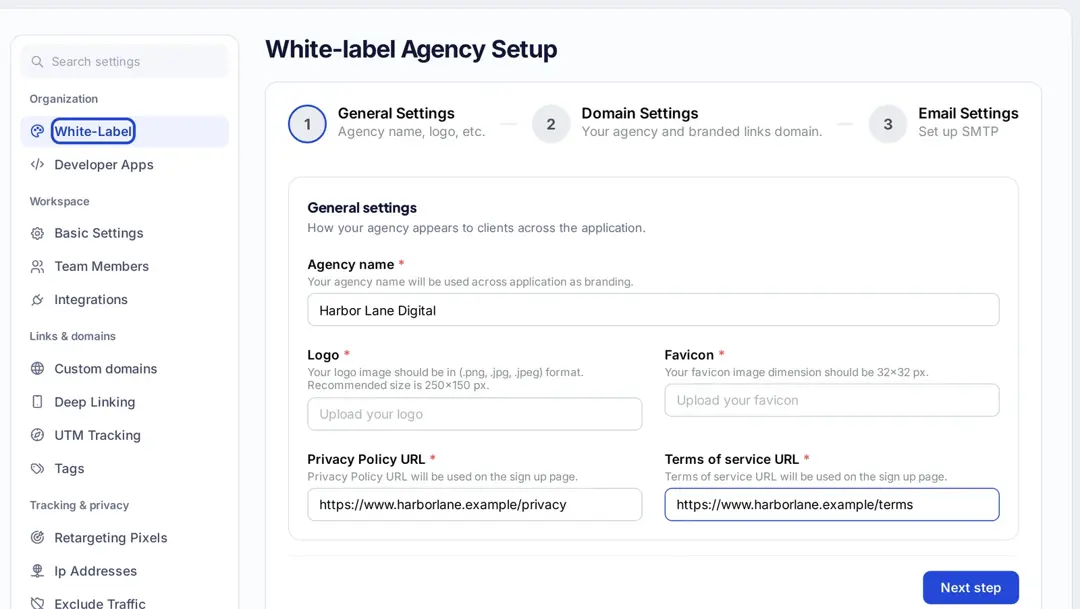
Setup happens in Settings > White-Label in three steps: General Settings (agency name, logo, favicon, privacy policy and terms URLs), Domain Settings and Email Settings. Behind the brand, clients get Replug’s link shortener, retargeting pixels, bio links, QR codes, deep links and CTAs. Per replug.io/pricing, the white-label dashboard, custom client reports, branded emails and custom login page are Agency-only, while removing Replug branding is on Scale and Agency. Custom domains for short links are on every plan, including Free. It’s white label rather than private label: every agency gets the same software, only the branding changes.
White-label example no. 02: Printful
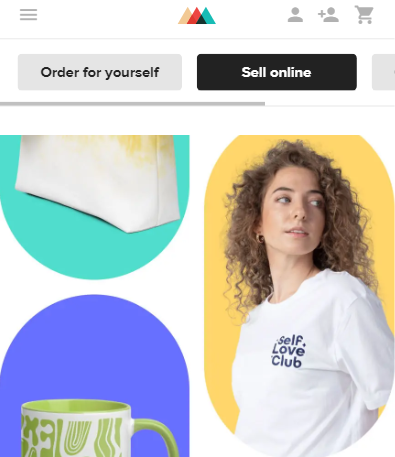
Printful is a print-on-demand company that lets businesses create and sell custom products like t-shirts, posters and accessories without holding inventory or running production. You add your own designs and logos, and Printful prints and ships the products. It can also print your own label: per Printful’s Help Center, a custom inside label replaces the original manufacturer tag, and it has to include the country of manufacturing origin, garment size and material.
White-label example no. 03: Printify
Printify is a print-on-demand platform. You design products, list them in your store and pay only when a customer orders; a network of print providers makes and ships them. According to Printify’s print-on-demand page (checked October 2026), its catalog has over 2,000 products, and you can publish them to Shopify, Etsy, Wix, WooCommerce, eBay and other platforms. The blank products are the same ones other sellers use, which is what makes this white label: your design and brand are the difference.
Top benefits of white labeling
Until now, you must have understood that white-label products are pre-manufactured items for you that are completely ready to be shipped with your brand logo. Here are some of the most prominent benefits of white-labeling.
- Lower initial investment: White label products are often cheaper than private label because you’re not customizing them from scratch.
- Faster turnaround time: Since the product already exists, you can get it to market quickly.
- Less risk: The product already exists and is sold elsewhere, so you can test demand without paying for development. You still need to check quality yourself before you sell it.
- Scalability: Easy to scale up or down production based on demand.
Read more: 14 Best white label marketing tools for agencies in 2026
Drawbacks of white labeling
White labeling has downsides too:
- No customization: The product itself is typically not customized for each purchaser; it remains the same for all buyers.
- Brand differentiation: Your product might be similar to offerings from other brands.
- Profit margins: Profit margins can be lower due to competition from other white-labeled versions.
What is private labeling?
Private labeling is a business strategy where a retailer or company contracts with a manufacturer to produce a product under their own brand name. The retailer essentially “outsources” the manufacturing process while controlling the branding and marketing of the final product.
Private label example no. 01: Heyday (Target)
Heyday is Target’s own electronics brand. According to Target’s owned-brands page (checked October 2026), it launched in 2018 as Target’s first Target-designed and exclusive electronics brand, with 150+ tech accessories, most at $30 or less. You can only buy it at Target, which is the point of private label: the product line belongs to one retailer. The same page says Target has more than 40 only-at-Target brands that make up about one-third of its annual sales, more than $30 billion a year.
Private label example no. 02: Stone & Beam (Amazon)

Stone & Beam is one of Amazon’s own home brands. Per About Amazon, Amazon launched Rivet and Stone & Beam in October 2017 as its first furniture and decor brands, and its team develops the brands’ products, materials and designs in-house rather than reselling another company’s line.
Benefits of private labeling
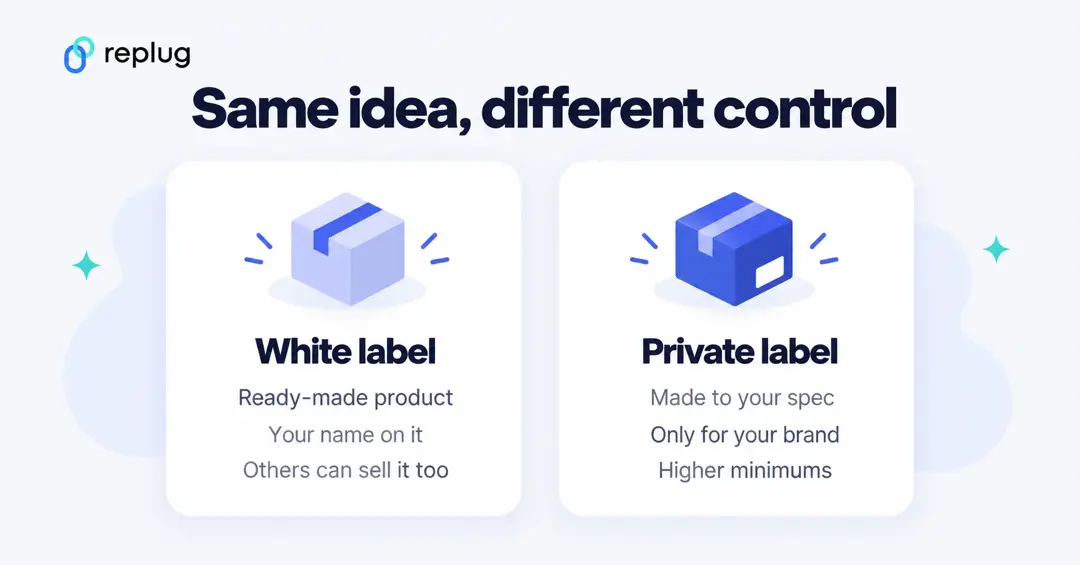
- Be your own brand boss: From product to packaging, you decide how it looks and works.
- More profit for you: Private labeling often allows for more control over production costs. By bypassing some middlemen, you can potentially increase your profit margins compared to selling established brands.
- Customer loyalty: Create products people love under your brand. Watch them come back for more!
- Solve specific needs: See a gap in the market? Private labeling lets you create the perfect product to fill it!
Drawbacks of private labeling
- Higher costs: Development and minimum order quantities can be expensive.
Helpful tip
“We would advise you to get quotes from multiple manufacturers and negotiate for the best price based on volume and order frequency.”
- Longer lead time: Customization takes time, delaying product launch.
- Minimum order quantities: Manufacturers often have minimum order quantities (MOQs) for private-label products. This can be a barrier for smaller businesses starting out.
- Risk of failure: If the product doesn’t resonate with consumers, you’re stuck with it.
However, keep in mind that just because a product has your label doesn’t mean customers will automatically recognize it. You’ll still need to invest in marketing and building brand awareness for your private-label line.
Similarities between white label vs private label
| Similiarity | Description |
| Product origin | Both utilize a product manufactured by a third party. |
| Branding control | The retailer or company has complete control over the branding, including logo, packaging, and marketing materials. |
| Sales and distribution | The retailer or company is responsible for selling and distributing the final product through their own channels. |
Difference between white label vs private label
| Differences | White-label | Private-label |
| Level of customization | Lower | Higher |
| Branding focus | Generic (may have minimal branding options) | Strong focus on creating a unique brand identity |
| Product development | Little to no control over product development | More involvement in product development, potentially including formula tweaks or feature adjustments |
| Minimum order quantities (MOQs) | Typically lower | May have higher minimum order quantities due to the potential for more customization |
| Cost | Generally lower | Generally higher |
White label vs private label in software
In software, the terms blur. “White-label software” means a platform you rebrand and resell or give to clients, such as a link management, reporting or BI dashboard with your logo and domain. You’ll also see “private label” used for the same thing (for example “private label BI”). The useful question is the same as with physical products: do you get the same product as everyone else with your branding on top (white label), or is it built or configured only for you (closer to private label)?
For most agencies and SaaS resellers, white label is the practical choice, because building a custom version of a platform is rarely worth it. When you compare platforms, check exactly what you can rebrand (app domain, links domain, emails, login page, reports), what clients will still see of the original vendor, and which plan includes it.
When to choose the white label or private label?
In white label vs private label, the best option for you depends on your business goals and resources. Here’s a quick guide:
- Choose white label if: You need a product quickly, such as a custom hat, have limited resources and want to test the market before investing heavily in branding.
- Choose a private label if: You have a clear brand vision, want a unique product offering, and are willing to invest time and money upfront.
Ultimately, both white-label vs private-label strategies can be successful. You can choose the path that propels your business forward by carefully considering your needs and limitations.
FAQs on white label vs private label

Manahil