Quick answer: lead generation is the process of attracting people who might buy from you and getting their permission to follow up, usually by collecting contact details in exchange for something useful (a free guide, a demo, a quote, a trial). Inbound lead generation brings people to you through search, content, social media and referrals; outbound lead generation means you reach out first, through cold email, calls, ads or events. The leads then get qualified and nurtured until they are ready to talk to sales or buy.
This guide explains how lead generation works, the main channels, how to generate qualified leads, how to measure the results, and which tools help with each part.
What is lead generation?
Lead generation is a marketing process that businesses, creators and consultants use to attract potential customers and turn them into leads: people or companies who have shared their contact details or shown clear interest, typically in exchange for valuable content, a consultation or an offer.
Not every lead is ready to buy. HubSpot’s guide to the marketing qualified lead (MQL) describes an MQL as a lead the marketing team considers more likely to become a customer, based on criteria such as pages visited, content downloaded and CTAs clicked; when sales agrees the lead has a good chance of converting, it becomes a sales qualified lead (SQL).
How does lead generation work?
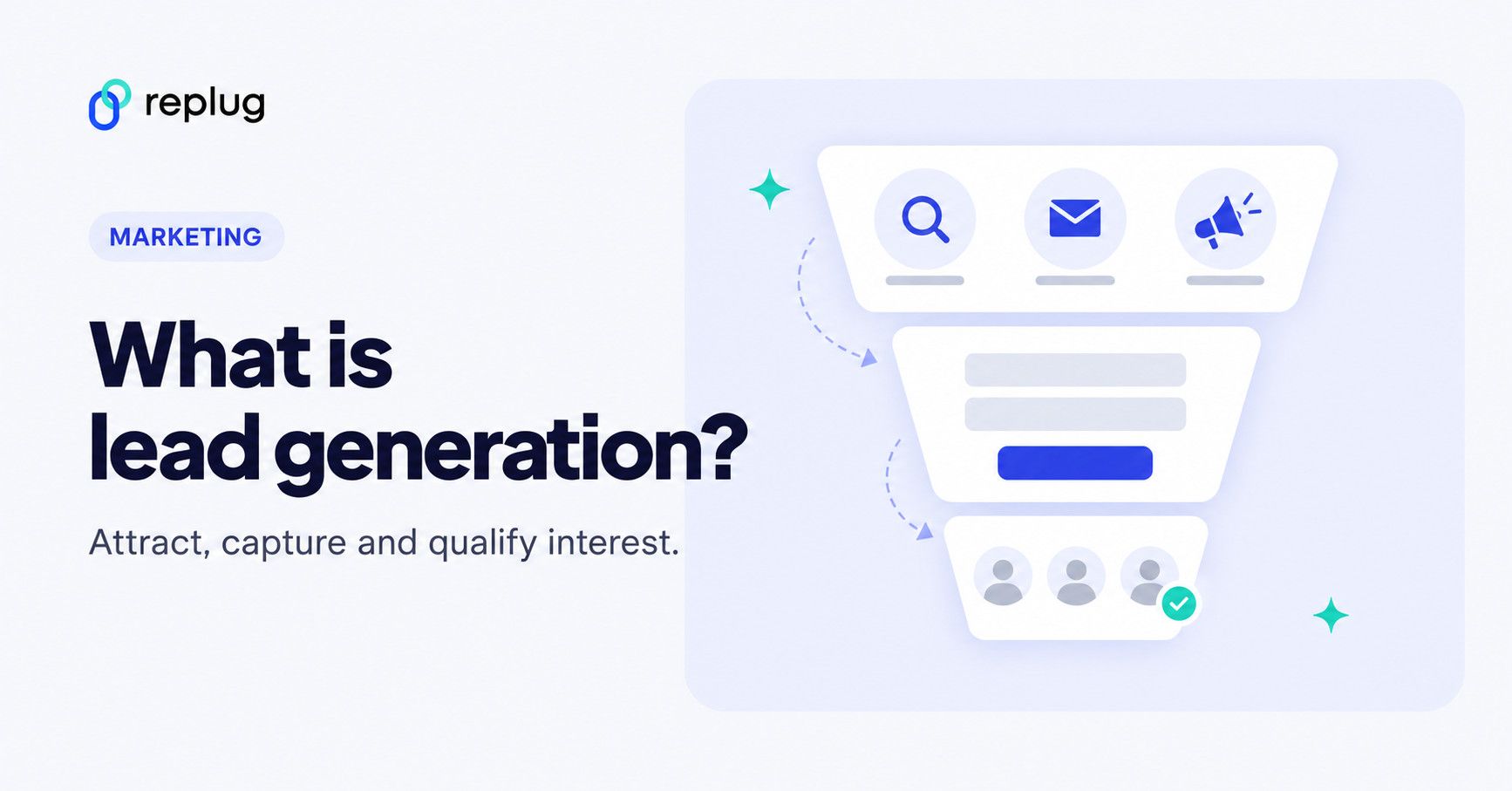
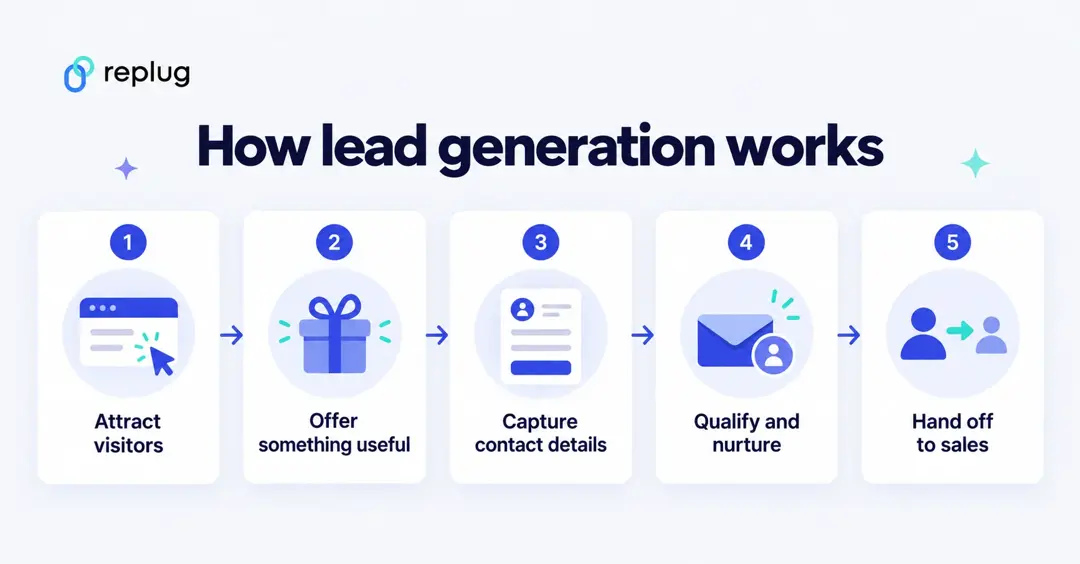
Here’s a breakdown of the lead generation process:
- Attracting traffic: Businesses use their website, search, social media, email newsletters, events and ads to bring the right people to a page with an offer.
- Offering value: To give visitors a reason to act, businesses offer free trials, e-books, webinars, templates, quotes or discounts.
- Capture information: Interested visitors share their contact details through a form, a chat or a sign-up to get the offer, and agree to hear from you.
- Lead nurturing: Leads then receive follow-up through relevant emails, content and calls, so they learn enough to decide.
- Conversion: Through nurturing, leads move toward a purchase, a sign-up for a service or another goal.
- Measurement & optimization: Throughout the process, businesses track where each lead came from and which sources turn into customers, then put more effort into what works. Our guide to lead tracking explains how to record lead sources.
Types of lead generation
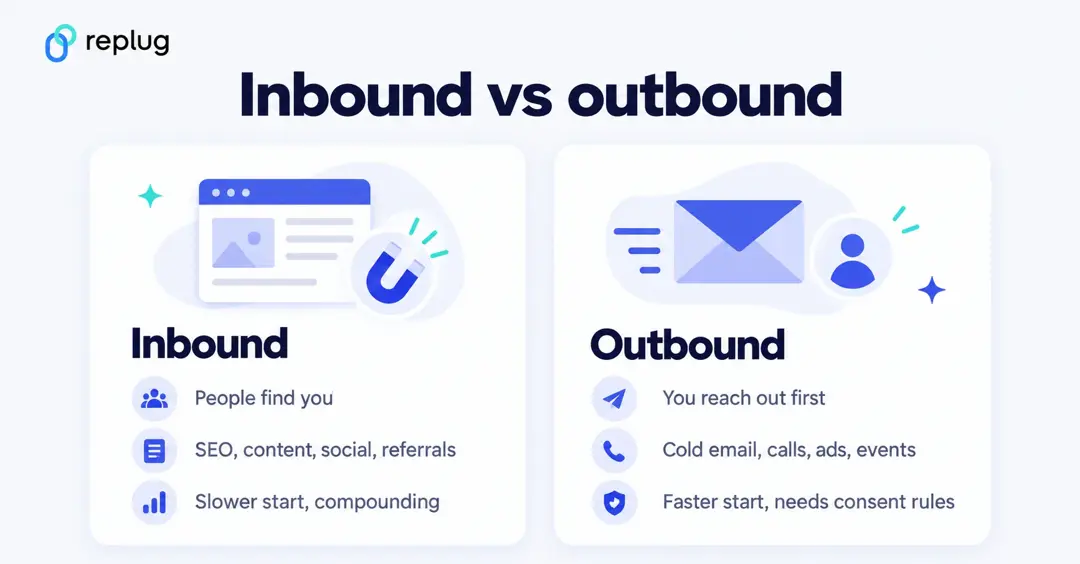
Lead generation tactics fall into two main categories: inbound and outbound. Most businesses use a mix.
1. Outbound lead generation
Outbound lead generation means the business reaches out first to people who haven’t contacted it. Common outbound tactics:
Cold email:
Sending a first email to a prospect who hasn’t subscribed, usually a business contact. In the US, commercial email must follow the CAN-SPAM Act: honest sender and subject line, a valid postal address and a working way to opt out, as the FTC’s CAN-SPAM compliance guide explains. Other countries have stricter consent rules.
Direct mail:
Sending printed pieces such as postcards, letters or catalogs to prospects. A QR code or a short link on the piece lets you see who responded.
Advertising:
Paid ads on search, social media or display networks put your offer in front of people who match your target audience. Retargeting ads remind people who visited your site to come back.
Cold calling:
Cold calling means calling prospects who haven’t contacted you. Sales calls in the US are covered by the FTC’s Telemarketing Sales Rule and the Do Not Call Registry, so check the rules that apply to you before you start.
2. Inbound lead generation
Inbound lead generation means prospects find you, through search, content, social media or a referral, and then choose to get in touch. Popular inbound tactics:
SEO:
Search engine optimization brings people who are searching for your topic to your website, where an offer can turn them into leads.
Blogging:
Helpful articles answer the questions your buyers have, attract search and social traffic, and give you natural places for a relevant offer.
Social media:
Social media builds attention and trust over time, and a link in your bio, posts or lead ads can send interested followers to your offer.
Email newsletters:
People who subscribe to your newsletter have asked to hear from you. Each issue can point them to an offer, a webinar or a demo.
Lead generation channels at a glance
| Channel | Type | Typical offer | How to measure it |
|---|---|---|---|
| SEO and blog content | Inbound | Guides, templates, checklists | Organic sign-ups by landing page |
| Social media (organic) | Inbound | Free resources, webinars, newsletters | Clicks and sign-ups from tagged bio and post links |
| Email newsletter | Inbound | Webinars, demos, upgrades | Clicks and replies per issue |
| Referrals and partners | Inbound | Referral rewards, co-hosted events | Leads by referral source |
| Paid search and social ads | Outbound (paid) | Demos, trials, quotes, lead forms | Cost per lead by campaign |
| Cold email and calls | Outbound | Short calls, audits, samples | Reply and meeting rates |
| Events and direct mail | Outbound | Consultations, event offers | Responses through QR codes or event-specific links |
How to generate marketing qualified leads?
Generating marketing qualified leads (MQLs) means attracting the right people and spotting the ones most likely to buy. Here’s how:
1. Define your target audience
- Ideal customer profile (ICP): Start by defining your ICP based on demographics, firmographics, behavior and pain points. Knowing who your ideal customer is helps you attract the right leads.
- Buyer personas: Develop personas for the different segments of your audience, including their job roles, challenges, goals and how they make decisions.
2. Content marketing
- Educational content: Create content that addresses your audience’s needs and pain points: blog posts, e-books, guides, case studies and videos.
- SEO optimization: Make sure your content is easy for search engines to understand and answers the queries your buyers search for.
- Content distribution: Promote your content through social media, email newsletters and communities where your audience spends time.
3. SEO and SEM
- Search engine optimization (SEO): Optimize your website and content to attract organic traffic, with clear page titles, useful content and links from relevant sites.
- Search engine marketing (SEM): Use paid search ads (PPC) on keywords that signal buying intent, and retarget visitors who left without converting.
4. Social media marketing
- Platform selection: Focus on the platforms your audience uses most. LinkedIn is widely used for B2B; Facebook, Instagram and TikTok are common for B2C.
- Engagement: Share useful content, reply to comments and take part in relevant groups and discussions.
- Paid advertising: Use social ads and lead forms to reach specific audiences by job, interest or behavior.
5. Email marketing campaigns
- Segmentation: Segment your list by industry, job role and engagement to send relevant messages.
- Lead nurturing: Set up automated email sequences that move leads closer to a decision with educational content, case studies and product information.
- A/B testing: Test subject lines, content, calls to action (CTAs) and landing pages to see what works better.
6. Lead magnets
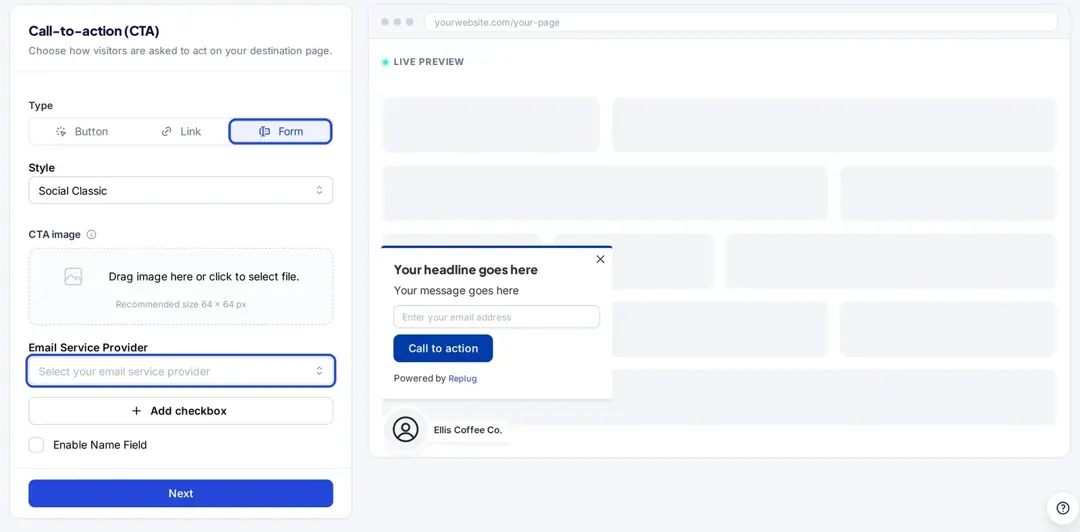
- Offers and incentives: Offer free trials, demos, webinars or downloads in exchange for contact information. Each lead magnet should solve one specific problem for your audience.
- Landing pages: Give each lead magnet its own landing page with a clear CTA, a short form and copy that matches the ad or post that sent people there.
- Exit-intent popups: Show a relevant offer to visitors who are about to leave your site.
7. Lead scoring
- Criteria definition: Score leads on fit (company size, role) and behavior (pages visited, content downloaded, emails opened, demo requested).
- Automation tools: Use marketing automation tools to track and score leads in real time. Platforms like ContentStudio, Marketo, and Salesforce can help automate the lead scoring process.
- Qualification thresholds: Agree with sales on the score at which a lead becomes marketing qualified, so sales spends time on the leads most likely to buy.
8. Analytics and refinement
- Performance tracking: Track website traffic, conversion rates by step, lead quality and cost per lead.
- Continuous improvement: Review your data regularly, A/B test different approaches and keep what works.
- Feedback loop: Meet with sales regularly to compare lead quality with what marketing sees, and adjust targeting and scoring together.
9. Leverage social proof
- Testimonials and reviews: Show customer testimonials and reviews near your offers and forms.
- Case studies: Share case studies that show how you solved a customer’s problem.
10. Utilize interactive content
- Quizzes and surveys: Create quizzes or assessments related to your industry and offer the results by email.
- Interactive tools: Offer calculators or assessments that give personalized results in exchange for contact information.
11. Offer exclusive content
- Gated content: Put high-value content such as e-books, whitepapers or research reports behind a sign-up form.
- Webinars and live events: Host webinars or virtual events on relevant topics with registration.
12. Referral programs
- Incentivize referrals: Reward existing customers for referring new leads.
- Partnerships: Partner with complementary businesses to cross-promote and share audiences.
13. Retargeting ads
- Ad campaigns: Use retargeting ads to re-engage visitors who interacted with your website but didn’t convert.
- Lookalike audiences: Build lookalike audiences from your existing leads to find similar people.
14. Leverage video content
- Explainer videos: Create short videos that show the benefits of your product or service.
- Live streaming: Use Facebook Live, Instagram Live or YouTube Live to engage your audience in real time and invite them to an offer.
How to measure lead generation
Count leads, but judge your lead generation by how many of them become customers. The numbers most teams track:
- Leads by source: which channels and campaigns bring leads. Tag your links with UTM parameters and pass them into hidden form fields so your CRM stores the source; our lead tracking guide shows how.
- Conversion rate by step: visitors to leads, leads to MQLs, MQLs to SQLs, SQLs to customers.
- Cost per lead: spend on a channel divided by the leads it produced.
- Lead-to-customer rate and revenue per lead: the numbers that show whether a cheap channel is actually a good one.
Lead generation tools
Each tool below covers a different part of lead generation. Feature and plan details come from each vendor’s own website, checked October 2026.
1. Replug
Replug is a link management tool: it shortens, brands and tracks the links you share. To be clear about what it does and doesn’t do: Replug doesn’t generate leads on its own and doesn’t track leads or conversions. It helps the links you already share in social posts, emails, ads and print work harder at the top of your lead funnel.
Top features of Replug for lead generation
- Form CTAs on shared links: a call-to-action overlay on the pages you share can show an email sign-up form that sends new subscribers to your email marketing tool. CTAs are on the Essentials plan and above.
- Bio links: a bio link page collects your offers, lead magnets and booking links behind the one link in your social profiles.
- UTM builder: add UTM parameters to every link, so your analytics and CRM can see which post or campaign each lead came from (all plans).
- Retargeting pixels: add your Meta, Google, LinkedIn or other ad pixels to short links, so people who click join your retargeting audiences (one pixel on Essentials, unlimited on Scale and Agency).
- A/B testing and traffic routing: split clicks between up to 20 landing pages, or route visitors by country, device or time (Scale and Agency).
- Branded URL: short links on your own domain; every plan, including Free, can connect custom domains.
- White labeling: agencies can show their own brand, domain and logo instead of Replug’s (Agency plan).
Price: Free plan available; paid plans start at $19 per month, or $9.50 per month billed annually, according to Replug’s pricing page.
Free trial: Yes (14-day free trial on paid plans)
2. Usermaven:
When it comes to lead generation, Usermaven has accurate and comprehensive data on your website visitors and their behaviors. Usermaven is a cutting-edge analytics tool that empowers marketers and product professionals with the insights they need to maximize their lead-generation efforts.
Key features of Usermaven:
- Effortless lead tracking: Usermaven’s accurate tracking captures all sources automatically, including organic traffic, inorganic traffic, and UTM sources, ensuring you never miss a potential lead. No more relying on developers or complex setup processes.
- Powerful event tracking: Easily track and analyze critical user events, such as form submissions, button clicks, and scroll depth, to gain a comprehensive understanding of your lead generation funnel’s performance.
- AI-powered insights: Leverage the power of Maven AI, Usermaven’s built-in data assistant, to uncover hidden patterns and opportunities for optimizing your lead generation funnel.
- Comprehensive visitor journey: Understand your prospects’ behavior with detailed user journeys, funnels, and attribution data, allowing you to identify bottlenecks and optimize conversion paths.
- Segmentation made easy: Usermaven’s intuitive segmentation tools enable you to slice and dice your audience data, helping you target specific segments with tailored messaging and offers.
- Privacy-friendly analytics: Usermaven prioritizes user privacy, making it a trustworthy choice for responsible lead-generation practices.
Price:
Usermaven offers flexible pricing plans to cater to businesses of all sizes:
- Pro plan ($14 per month)
- Premium plan ($24/month)
- Enterprise plan (Custom pricing)
3. Leadfeeder
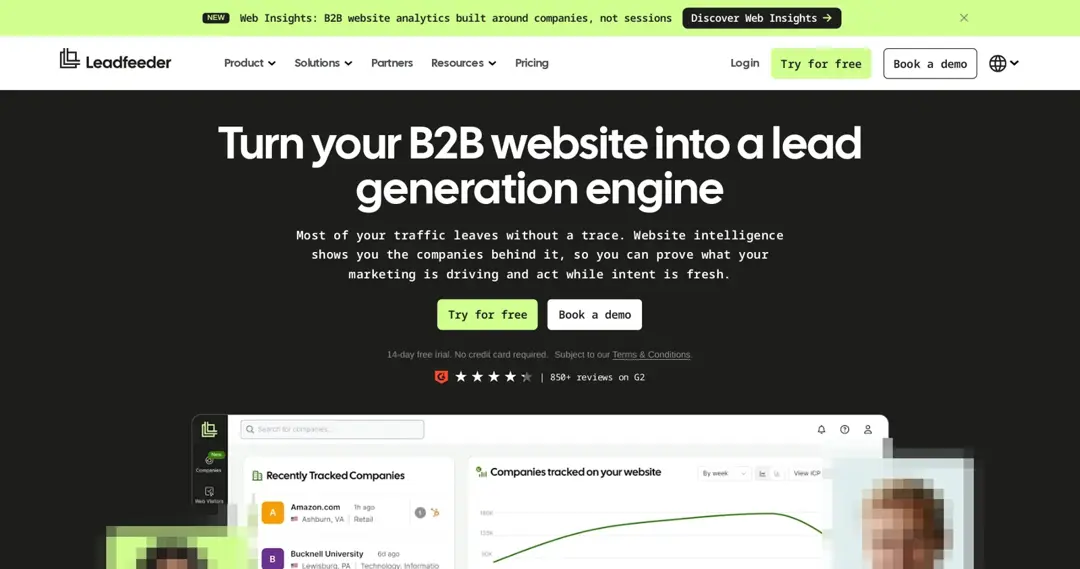
Leadfeeder shows which companies visit your B2B website, so sales and marketing can follow up while interest is fresh. It is part of Dealfront.
Key features of Leadfeeder (from its website, checked October 2026):
- Company identification: see the companies behind your anonymous website traffic.
- Tracking across sites: track every website you run on one plan.
- Enrichment: enrich companies and contacts with AI, paid with credits.
Price: Free plan (the last 100 companies per month in Web Visitors) and a 14-day free trial of paid plans; prices on the Leadfeeder pricing page.
4. Reply.io
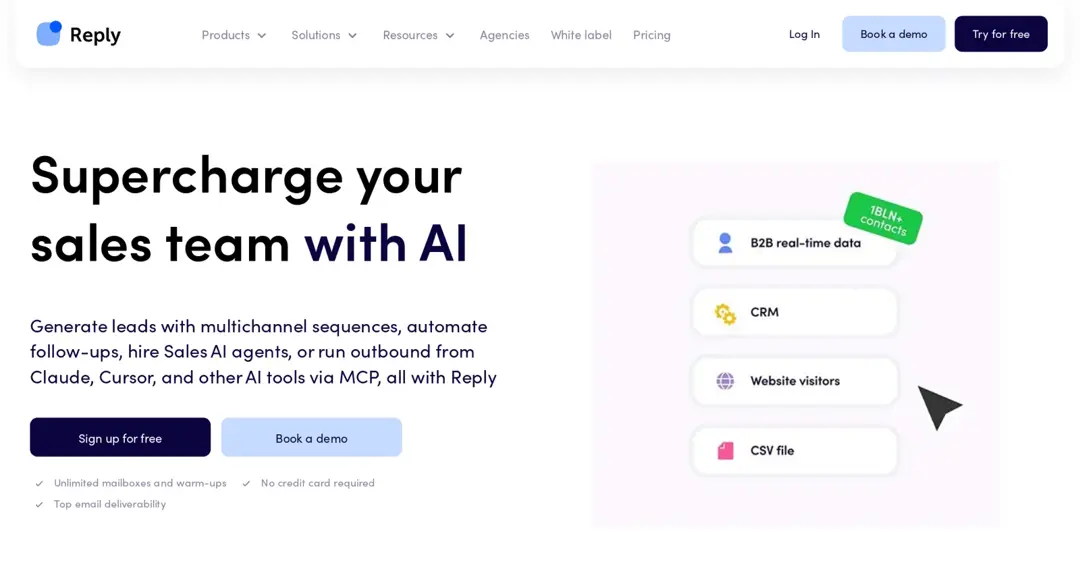
Reply.io is a sales outreach platform for running multichannel sequences (email, LinkedIn, calls and SMS) with a database of B2B contacts.
Key features of Reply.io (from its website, checked October 2026):
- Multichannel sequences: combine email, LinkedIn, calls and SMS, with automated follow-ups.
- B2B contact data: search real-time B2B contact data and email finders.
- AI agents: AI sales agents and outbound from AI tools via MCP.
- Deliverability: unlimited mailboxes and warm-ups.
Price: Free sign-up with no credit card and a 14-day trial; plans on the Reply pricing page.
5. Meet Alfred
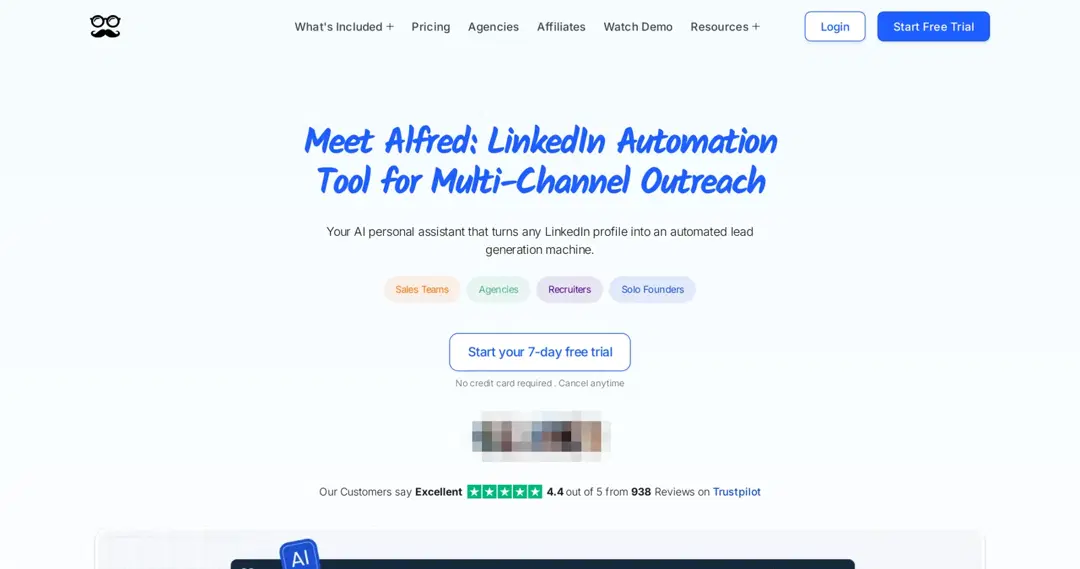
Meet Alfred is a LinkedIn automation tool for multichannel outreach, used by sales teams, agencies, recruiters and solo founders.
Key features of Meet Alfred (from its website, checked October 2026):
- LinkedIn campaigns: automated LinkedIn outreach sequences.
- Multichannel outreach: combine LinkedIn with email and other channels.
- Team features: built for teams that run outreach for several accounts.
Price: 7-day free trial with no credit card; plans from $35 per user per month billed annually, per the Meet Alfred pricing page.
Note: LinkedIn’s User Agreement says members must not use bots or other unauthorized automated methods to send messages, add contacts or drive engagement. Read it before automating outreach from your profile.
6. LeadIQ
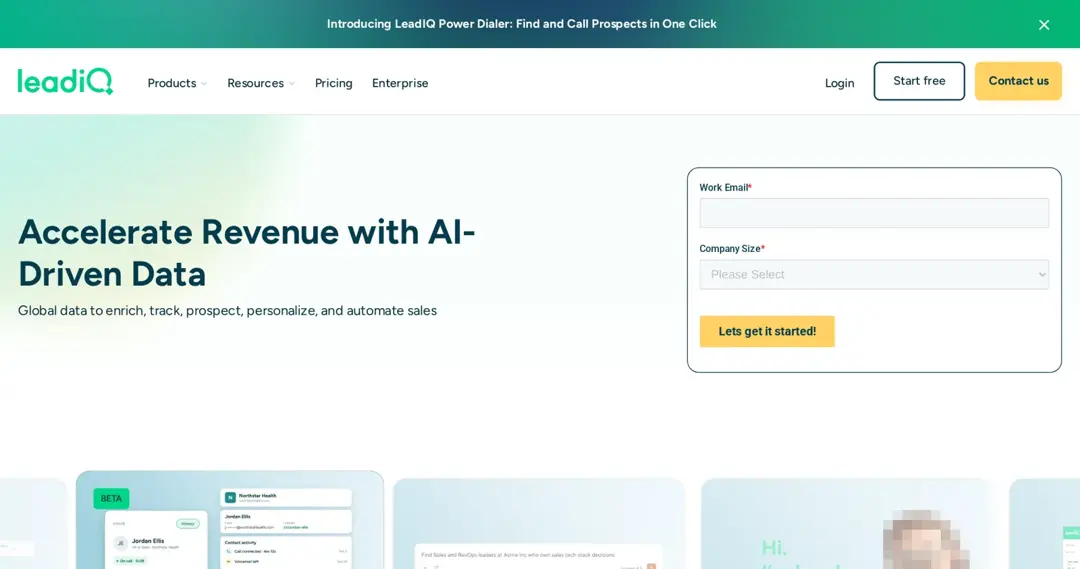
LeadIQ is a B2B prospecting platform with contact data, a browser extension and CRM enrichment.
Key features of LeadIQ (from its website, checked October 2026):
- Prospector: capture leads from your browser and sync them to your CRM in one click.
- CRM enrichment: enrich Salesforce and HubSpot records and use an API.
- Champion tracking: get alerts when buyers change jobs.
- Power Dialer (beta): call leads from one queue with their history.
Price: Free plan (1 user, 50 credits); paid plans can be tried free for 30 days, per the LeadIQ pricing page.
FAQs about lead generation

Mustafa Niazi