To turn a link into a QR code, copy the full URL, paste it into a QR code generator such as Replug’s free QR code generator, choose a design and download the image: PNG or JPEG for screens, SVG or PDF for print. For a quick code for the page you are on, Chrome and Microsoft Edge can make one from their menus. Scan the result with your phone before you share or print it.
Below are the steps on replug.io, inside the Replug app and in your browser, the difference between a static and a dynamic URL QR code, and a short checklist for before you print.
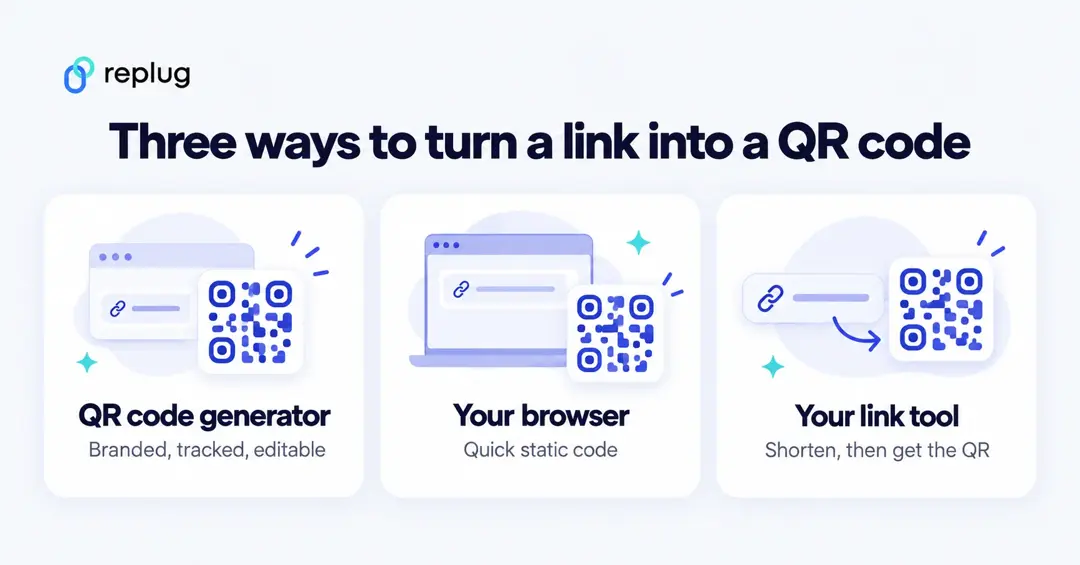
What is a URL QR code?
A URL QR code opens a web address when someone scans it. A static code stores the URL itself, so it can’t change. A dynamic code stores a short link that redirects to your URL, so the owner can count scans and, with some tools, change the destination later (see what a dynamic QR code is).
The main benefit is that people reach a page without typing a long address, which saves time and avoids typos. Phones read these codes without an extra app: an iPhone scans them in the Camera app, according to Apple Support, and most Android phones scan them with the camera or Google Lens, according to Android. Here’s how to scan a QR code on any device.
It is also free and easy to make one: you only need a QR code generator and the URL. A short link generator such as Replug can also count the clicks and scans behind the code, which shows you whether people use it.
Static or dynamic: which should you make?
| Static URL QR code | Dynamic URL QR code | |
|---|---|---|
| What the code holds | Your full URL | A short link that redirects to your URL |
| Change the page after printing | No, you need a new code | Yes, if your tool allows it (on Replug: Scale and Agency plans) |
| Count scans | No | Yes, in the tool’s analytics |
| Keeps working if | The page stays online | The page stays online and the short link stays active |
| Good for | A quick, one-off share | Print, packaging and campaigns you want to measure |
Every code made with Replug is dynamic: each one runs through a branded short link, which is what lets it track scans, according to the QR code generator page.
How to turn a link into a QR code with Replug’s free generator
- Copy the full URL. Open the page in your browser and copy the address from the address bar, including https://.
- Open the generator. Go to replug.io/qr-code-generator and keep Website selected under Content.
- Paste the URL into Destination URL. The live preview on the right updates as you type.
- Design it. Under Design, pick colors, a pattern, corners and a frame. Adding your logo is on the Scale and Agency plans.
- Download it. Click Get your QR Code for free and create a free account (no credit card) to download PNG, JPEG, SVG or PDF.
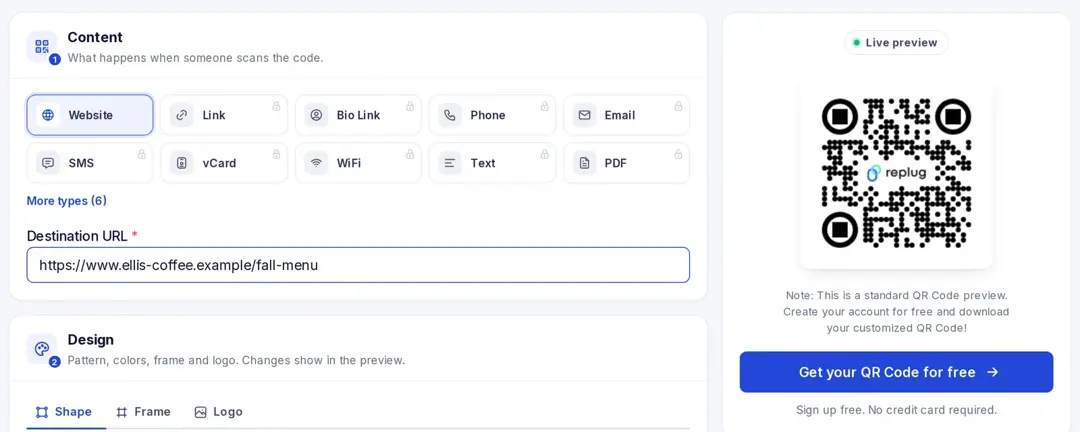
The page itself only shows a standard preview; your customized code downloads after you sign up. The Free plan includes 10 QR codes, Essentials 100 and Scale and Agency as many as you need, according to the QR code generator page and Replug’s pricing. Website, short link and Bio Links codes are on every plan; other code types start on Essentials.
How to create a QR code for a URL using Replug?
Follow these steps to create a QR code for any URL inside the Replug app. They match the app as it looked in October 2026.
Step 1: Sign in to Replug or create a new account for free.
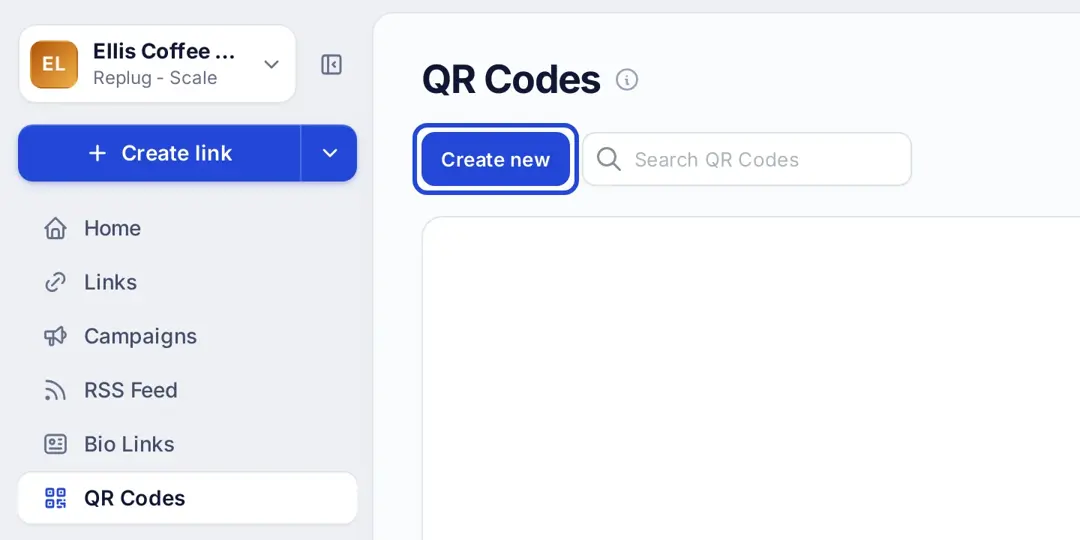
Step 2: In the left sidebar, open QR Codes and click Create new. If you’re offered templates, choose Start blank.
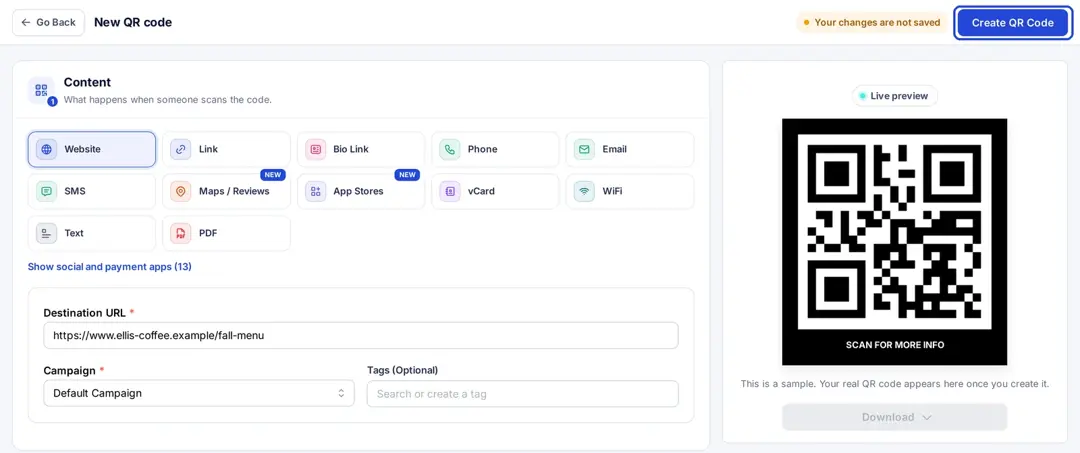
Step 3: Under Content, select Website, paste your URL into Destination URL and pick a Campaign (the Default Campaign is fine). Tags are optional.
Step 4: In Design, change the shape, colors and frame (Essentials and up) or add your logo (Scale and Agency), per Replug’s pricing. Then click Create QR Code.
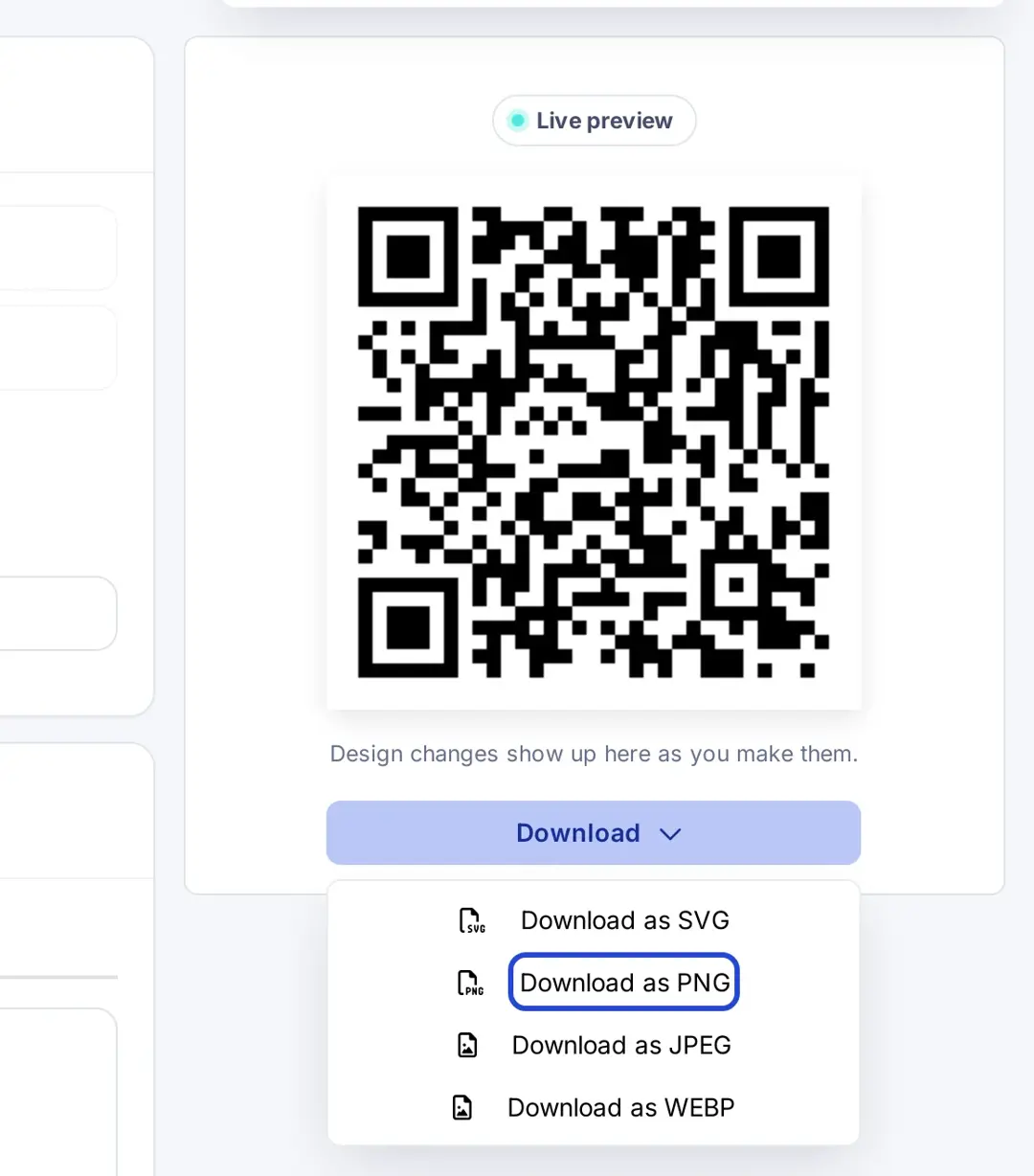
Step 5: Open Download and choose SVG, PNG, JPEG or WEBP. Use SVG for print, since it stays sharp at any size.
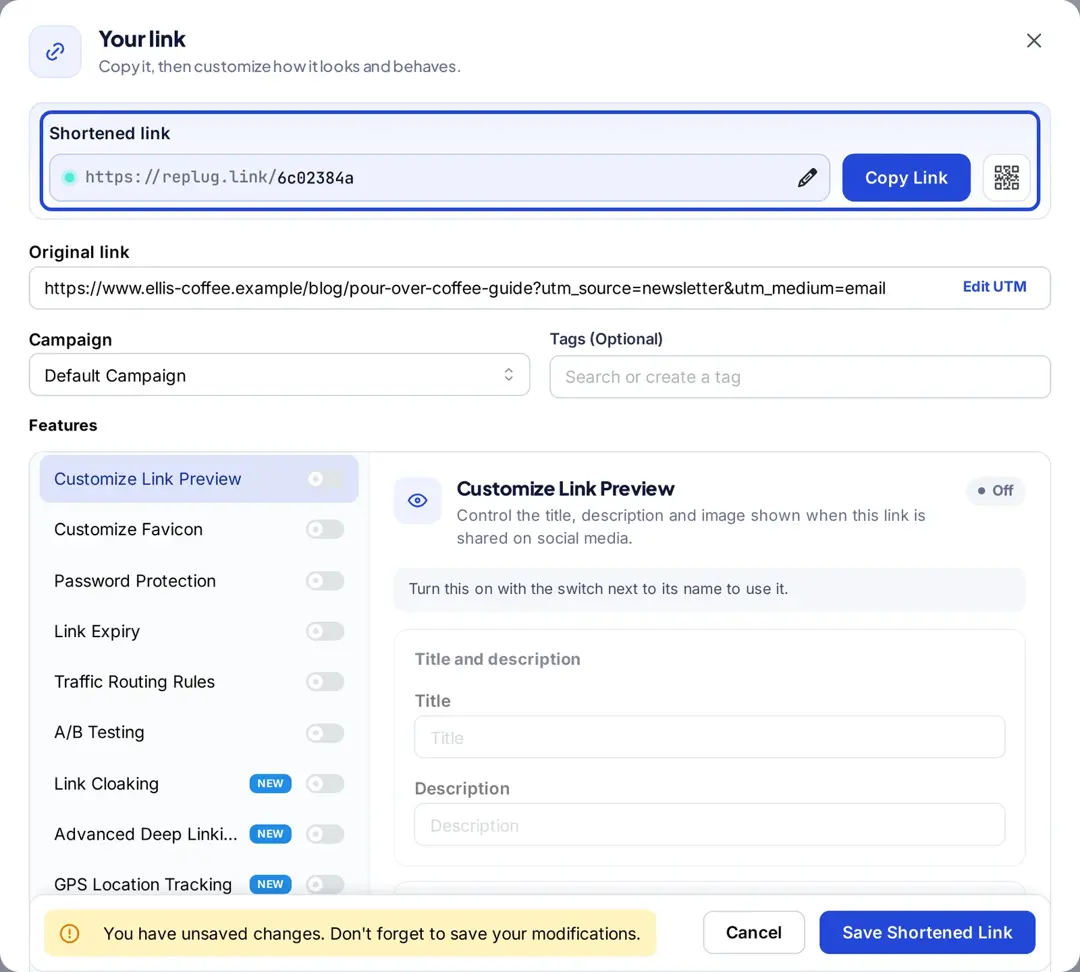
Already have a short link? After you shorten a URL in the box on the Home screen, the Your link window shows a QR code button next to Copy Link.
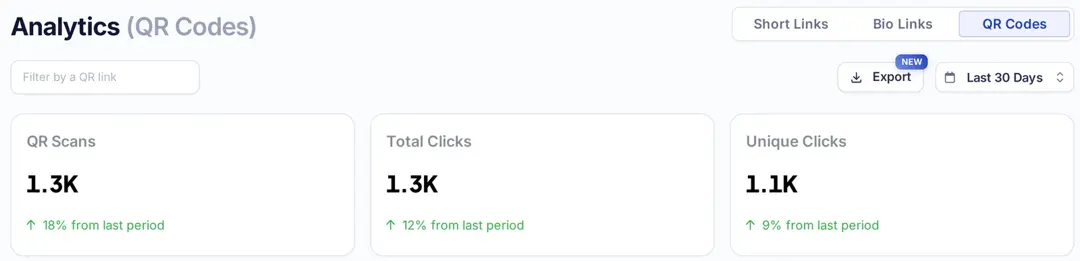
Scans then show up in your QR analytics next to total and unique clicks, by country, city, device, OS and browser. Analytics history is 14 days on Free, 90 days on Essentials and unlimited on Scale and Agency, according to Replug’s pricing.
How to make a QR code for a link in Chrome or Edge
If you only need a quick code for the page you’re on and don’t need to track scans or change the link later, your browser can make one:
- Chrome on a computer: go to the page, open the More (three dots) menu, select Cast, save, and share, then Create QR code. You can copy the link, download the code or scan it with another device (Chrome Help).
- Chrome on Android: tap More, then Share…, then QR Code, and follow the prompts to share or download it (Chrome Help).
- Chrome on iPhone or iPad: tap Share at the top, then Create a QR Code, then Share below the code (Chrome Help).
- Microsoft Edge: right-click a blank area of the page and choose Create QR code for this page; you can download it as a PNG (Microsoft Edge).
These codes are static: they hold the page’s URL, can’t be edited after you share them and don’t count scans.
Before you print or share your QR code
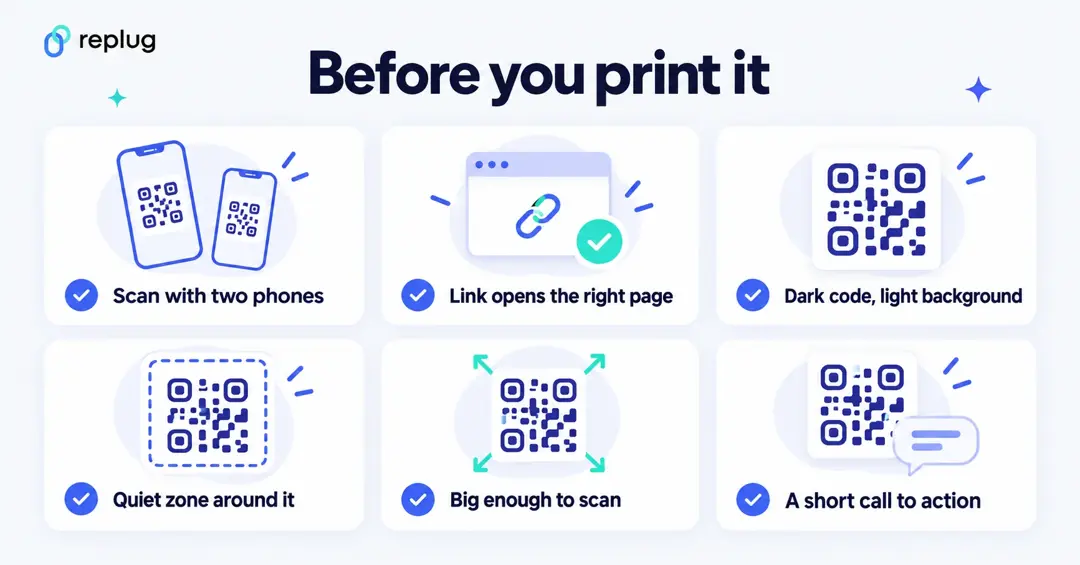
- Scan it with at least two phones, one iPhone and one Android, and make sure it opens the right page.
- Keep the code dark on a light background, with clear space (the quiet zone) around it.
- Print it big enough for the scanning distance; see standard QR code sizes.
- Add a short call to action next to it, such as “Scan for the menu”, so people know what they get.
- If a code won’t scan, see why a QR code isn’t working.
Read also: How to create a multi URL QR code?
Frequently asked questions

Arslan Jadoon