Have you ever seen a poster or a magazine ad that caught your eye and wished you could learn more instantly?
That’s where QR codes come in! These nifty little squares are revolutionizing the way we interact with advertising by creating a direct line from the physical world to the digital one.
With a quick smartphone scan, you can access exclusive deals and exciting videos and even connect with brands on social media. It’s like having a mini gateway to a world of information right in your pocket!
QR codes have become a normal part of advertising: on posters, packaging, mailers and even TV screens, they turn “find out more” into one scan.
In this blog, we’ll explore how QR code advertising is not only enhancing consumer experiences but also helping businesses connect with their audience in new and engaging ways. Let’s get into the details!
Quick answer: QR code advertising means putting a QR code in an ad (print, billboard, TV or streaming spot, packaging, direct mail or a digital ad) so people can scan it with their phone camera and land on a page that continues the ad: an offer, a sign-up, a video or a store. Use a dynamic QR code that runs through a short link, so you can count scans for each placement and fix the destination after the ad is printed or aired, and tell people what they get for scanning.
What is QR code advertising?
QR code advertising involves using Quick Response (QR) codes in promotional materials to connect users directly to the brand’s online content. These codes can be scanned using smartphones, leading consumers to websites, videos, social media pages, etc.
How do QR codes work?
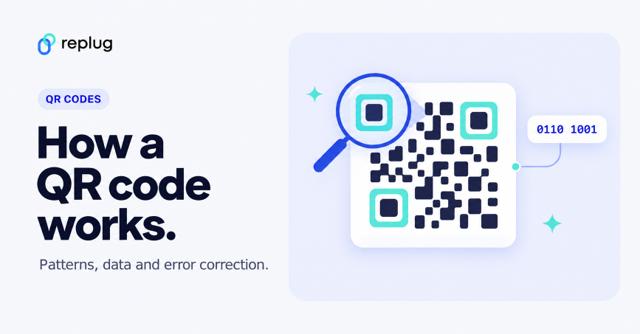
QR codes are two-dimensional barcodes that store information in a grid pattern.
- Scanning: Users scan the QR code using a smartphone camera or a dedicated QR code reader app.
- Decoding: The scanner decodes the information stored in the QR code, which typically includes a URL or text.
- Accessing content: After decoding, the user is directed to the encoded link, leading them to websites, videos, social media pages, or special offers.
- Interactivity: QR codes can facilitate actions like downloading apps, adding contacts, or sending messages, enhancing user engagement.
- Tracking and analytics: Businesses can track how often QR codes are scanned, providing insights into consumer behavior and campaign effectiveness.
Dynamic QR codes: The game changer for marketers
One of the most significant innovations in QR code technology is the rise of dynamic QR codes. Unlike static QR codes, dynamic codes can be updated after being printed. This means you can change the destination URL or the content the code links to without needing to print new materials. (In Replug, changing a printed code’s destination is part of the Scale and Agency plans, according to the QR code generator page.)
Dynamic QR codes also offer advanced analytics, allowing businesses to track real-time user interactions. For example, you can see how many people scanned the code, where they scanned it, and what type of device they used. This provides valuable insights into customer behavior and helps you optimize your marketing efforts.
Benefits of QR code advertising
| Benefits of QR code advertising | |
| Personalized experiences | QR codes can be used to deliver personalized content based on user preferences or demographics. |
| Measurable results | By tracking the number of scans and user behavior, marketers can gain valuable insights into the effectiveness of their campaigns. |
| Real-time updates | It can be updated dynamically, allowing marketers to change or add information as needed quickly. |
| Cost-effective | QR codes can be easily incorporated into existing marketing materials, making them a cost-effective way to enhance campaigns. |
| Advanced accessibility | It can be used to provide information in multiple languages or formats, making it accessible to a wider audience, including those with disabilities. |
QR code advertising by medium
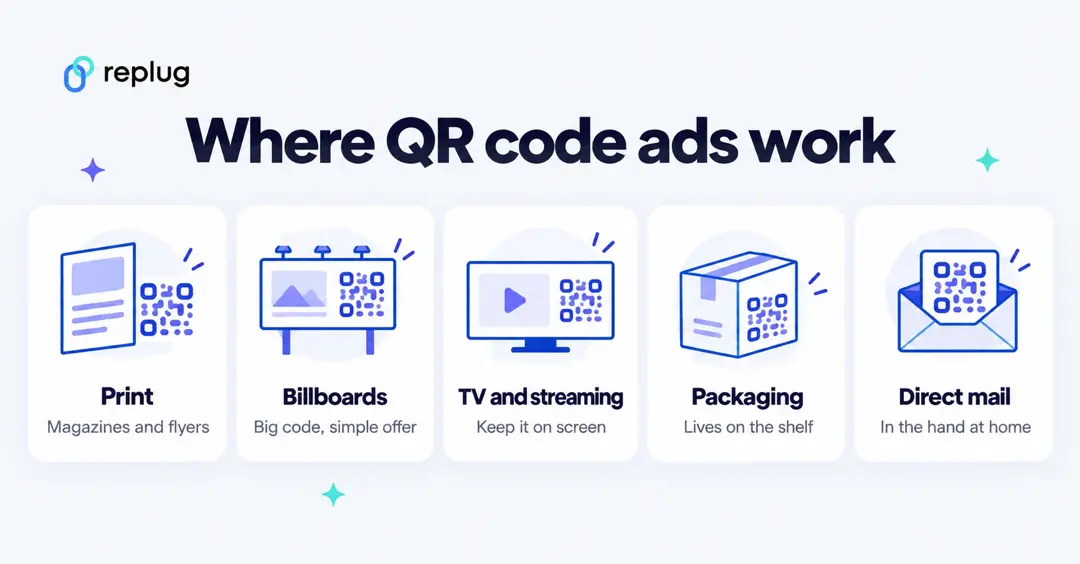
Where the ad runs decides how big the code needs to be, how long people have to scan it and what the page behind it should do. Here is how QR codes fit each common ad medium, with real campaigns where the brand or a reputable outlet has documented them.
| Medium | How people scan it | What to link to | Real example |
|---|---|---|---|
| Print (magazines, newspapers, flyers) | Up close, at their own pace | A mobile page with the offer, a video or a sign-up form | – |
| Billboards and transit (out of home) | From a distance, often while moving | One simple action: a short offer page or an app download | – |
| TV and streaming | Only while the code is on screen | A page that works on the phone in the viewer’s hand | Coinbase’s 2022 Super Bowl ad (SiliconANGLE); Burger King at the 2020 VMAs (Marketing Dive) |
| Packaging | At the shelf or at home, any time | Product details, recipes, how-tos, promotions | Coca-Cola’s Coke Studio “Drink. Scan. Win.” (Coca-Cola South Africa) |
| Direct mail | In the hand, at home | A personal or campaign page, booking or checkout | USPS 2026 Integrated Technology Promotion (USPS PostalPro) |
| Digital ads, email and social | On another screen, or saved for later | The same page as the ad’s link; a QR code helps when the ad is seen on a TV or desktop | – |
Each row is covered in more detail in the list below.
18 creative ways to use QR code advertising
Now, here’s the exciting part about QR codes: they’re incredibly versatile! Not only can you print them on physical materials to reach your audience, but you can also share them digitally across online platforms.
This dual approach opens up endless possibilities for engaging your customers innovatively.
Let’s explore some of the best examples and effective uses of QR codes in both digital and offline worlds.
Digital QR code advertising
Digital platforms are the perfect space for QR code advertising. They allow brands to reach vast audiences while offering cost-effectiveness and precise targeting.
1) Add QR codes to your brand website
Adding QR codes to your website is a smart way to enhance user experience. These codes can direct visitors to product details, promotions, or downloadable resources. You can also track QR code scans using advanced QR code generators to gain insights into user preferences and behavior.
QR codes also link online and in-store activity. When Shein ran its first pop-up inside a Forever 21 store in California in October 2023, shoppers had to scan a QR code to make an appointment to enter, according to Retail Tech Innovation Hub.
2) Utilize deep links in QR code advertising
Deep linking with QR codes allows you to guide users directly to specific content on your site or app. This is especially useful in email campaigns, mobile ads, and social media posts, where users want quick access to content.
For instance, deep linking can streamline the checkout process on e-commerce sites, directing users to their shopping cart or payment page.
Pro Tip: While QR codes can simplify navigation, don’t rely solely on them for frequent site visits. Short URLs are often easier for customers to remember.
3) Promote QR codes in social media posts
Integrating QR code advertising into your social media strategy is a highly visual way to engage followers. Platforms like Instagram, Facebook, and TikTok allow brands to post QR codes, encouraging users to scan for exclusive content or offers.
Event organizers, for example, can include QR codes in their posts to simplify ticket purchasing or RSVPs. Additionally, partnering with influencers to promote QR codes can greatly increase traffic and engagement.
4) QR codes in TV commercials
TV commercials featuring QR codes offer a new level of interactivity. Viewers can scan the code on the screen, taking them directly to your brand’s website or social media pages for more information.
The best-known example is Coinbase’s 2022 Super Bowl ad. According to SiliconANGLE, the 60-second spot showed little more than a QR code bouncing around the screen; people who scanned it reached a page offering $15 in free bitcoin for signing up, Coinbase’s app rose to the top of Apple’s App Store, and the traffic briefly crashed its website. Plan for spikes: a code shown to millions of people at once needs a page that can handle them.
Live TV works too. During the 2020 MTV Video Music Awards, Burger King showed a QR code that viewers could scan with their phone cameras to open an augmented reality experience and get a free Whopper with a $1 purchase in the BK app, Marketing Dive reported.
5) Boost sign-ups with QR codes in email marketing
Including QR codes in your email newsletters is a powerful tactic to increase engagement. Subscribers can scan the QR code to access special discounts, product launches, or exclusive content.
Loyalty programs are a natural fit: a QR code in a newsletter can open the offer page in your app or a sign-up page, which is handy when the email is read on a desktop and the app lives on the phone.
6) Mobile QR code advertising
As mobile device usage dominates online browsing, QR code advertising in mobile ads offers a fast, seamless experience for users. QR codes can direct them to multimedia content like videos or slideshows that tell your brand’s story.
Travel agencies, for instance, use mobile QR code advertising to provide instant access to boarding passes and itineraries.
7) Enhance virtual events with QR code advertising
For virtual events, QR codes simplify the registration and participation process. Attendees can scan the code to access live sessions, download materials, or engage with interactive event content.
8) Use QR codes for digital receipts
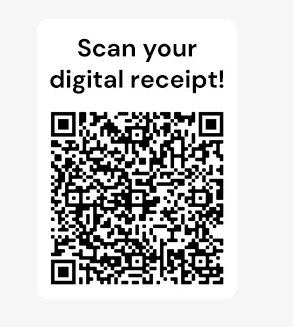
Switching from paper to digital receipts with QR codes is both eco-friendly and convenient. Retailers can link digital receipts to loyalty programs or exclusive offers, encouraging repeat purchases and improving customer engagement.
9) Gather quick customer feedback with QR codes
Collecting customer feedback through QR codes can enhance your business. By placing QR codes on digital receipts, packaging, or promotional materials, customers can easily access a survey and provide feedback.
Offline QR code advertising
While digital advertising is essential, offline QR code advertising is equally effective. Integrating QR codes into print media, packaging, and physical locations can drive traffic and engagement.
10) QR codes in print advertising
Print advertising comes alive when combined with QR code advertising. Whether it’s a brochure, magazine, or flyer, adding a QR code provides readers with instant access to more content. For instance, a local boutique, they could include a QR code in their magazine ad that directs customers to their online store.
11) QR codes on product packaging
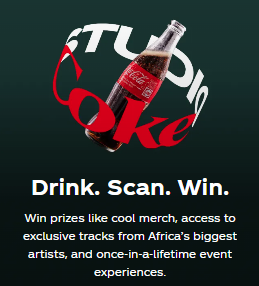
Many brands are leveraging QR code advertising on their product packaging. In South Africa, for example, Coca-Cola runs its Coke Studio promotion under the line “Drink. Scan. Win.”, with prizes such as concert tickets on the official promotion page.
This type of QR code advertising helps create a deeper connection with the brand and enhances the overall product experience.
Packaging codes are also becoming more standard. GS1 US, the barcode standards body, is leading “Sunrise 2027”, a move from 1D UPC barcodes to 2D barcodes such as QR codes; it asks brands to update existing QR codes to the GS1 Digital Link standard so that one code can serve both the checkout scanner and shoppers’ phones (GS1 US).
12) Business cards with QR codes
Adding a QR code to your business card can make a memorable impact. Graphic designers often use QR codes to link their business cards to online portfolios, offering potential clients a seamless way to view their work.
Pro Tip: Use a short URL in situations where users have less time to scan QR codes, like networking events.
13) Enhance in-store promotions with QR code advertising
QR code advertising within in-store promotions enhances the shopping experience. For example, grocery stores can place QR codes next to sale items, linking customers to recipes or nutritional information, which can influence purchasing decisions.
14) Real estate listings with QR codes
In real estate, QR code advertising helps potential buyers access property details quickly. QR codes on For Sale signs can lead to virtual tours, photos, and pricing information, providing a convenient and pressure-free browsing experience. For example, real estate businesses can efficiently showcase numerous properties by incorporating high-resolution virtual tours into QR advertising. This approach captures consumer interest through interactive and immersive visual content
15) QR codes on restaurant menus
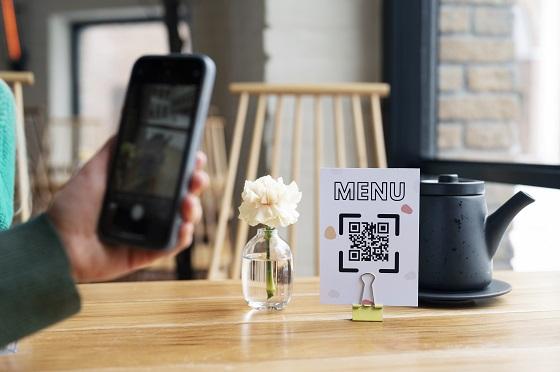
QR code menus in restaurants have become a standard in the hospitality industry. They allow customers to browse the menu, check out daily specials, or even place orders digitally, enhancing the dining experience.
16) QR code billboards
Billboards featuring QR code advertising provide a unique way for brands to engage passersby. For instance, a concert billboard with a QR code could lead directly to ticket sales or event information.
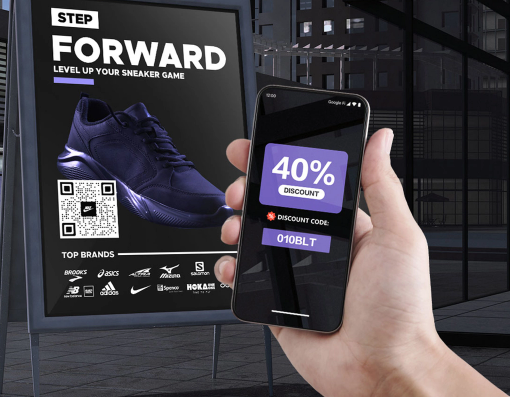
Billboards give people only a few seconds, often from far away, so keep the offer simple, make the code big enough for the viewing distance and add a short, readable web address next to it for anyone who can’t scan in time.
17) Authenticate purchases with QR codes
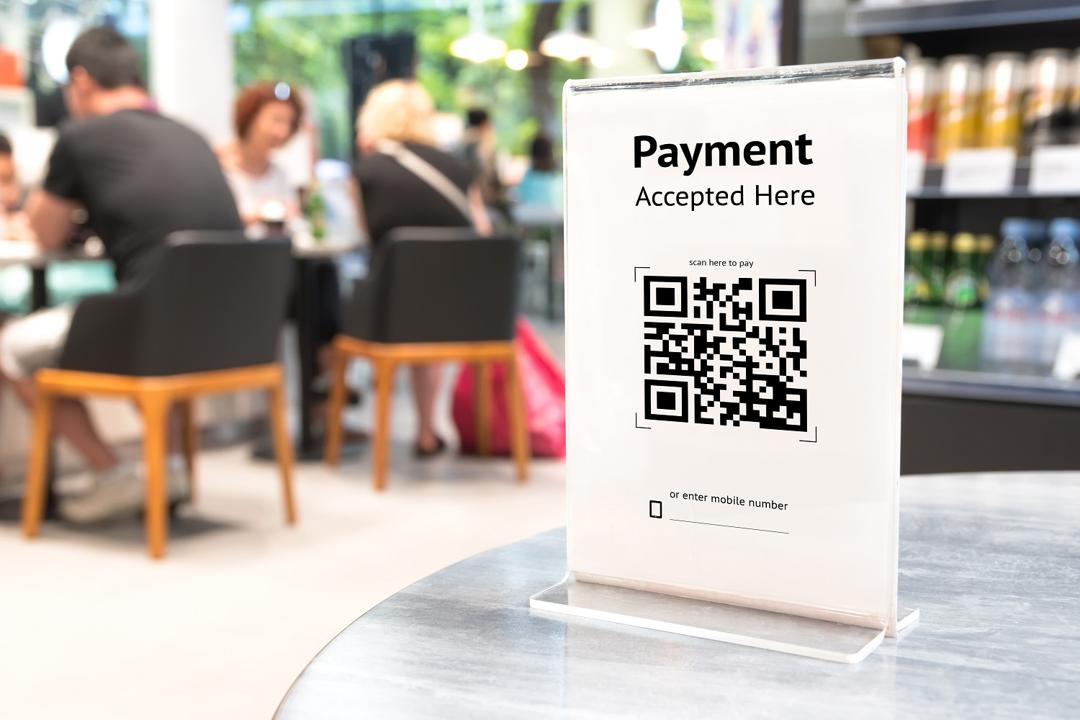
QR codes are also used for product authentication, particularly in industries plagued by counterfeiting.
A code on a product tag or certificate can open a page that confirms the item is genuine, shows care instructions or registers a warranty. Make sure the page is on your own domain, because shoppers can’t tell a real verification page from a fake one by looking at the code.
18) QR codes in direct mail
Direct mail puts the code in someone’s hands at home, where they have time to scan. The U.S. Postal Service even rewards it: its 2026 Integrated Technology Promotion gives a 5% postage discount on qualifying First-Class Mail and USPS Marketing Mail that uses eligible technology such as a QR code, for up to six consecutive months of the year, according to the USPS 2026 Integrated Technology guidebook. Check the guidebook’s requirements before you print.
Use one code per mail drop (or per version you test) so you can see which mailing brought the visits.
How to create a QR Code for advertising?
Creating a QR code is very easy. You just need to have an advanced QR code generator. Many QR code generators are available online, both free and paid. Look for one that allows customization and analytics tracking, such as Replug.
Replug is a link management platform that allows you to create short, branded links, including QR codes. It also offers a URL shortener free tool, making it easy for marketers to track engagement and analyze link performance without upfront costs.
Here’s how you can use Replug to create a QR code.
- Sign up: Create an account on Replug. The Free plan includes 10 QR codes; paid plans start with a 14-day trial.
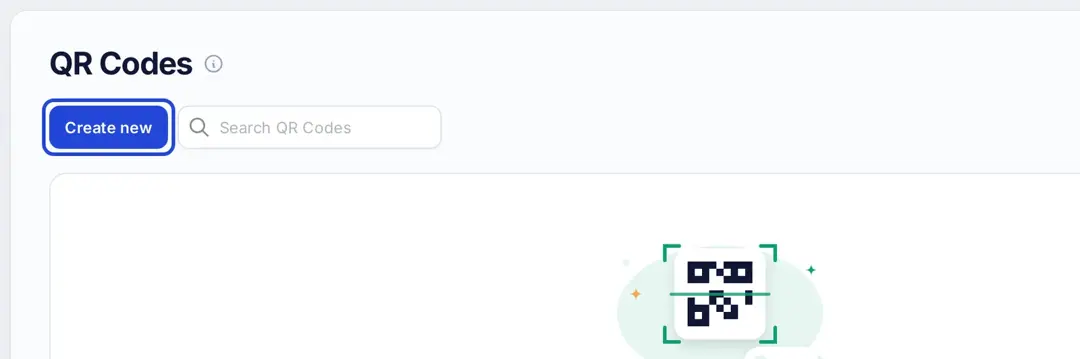
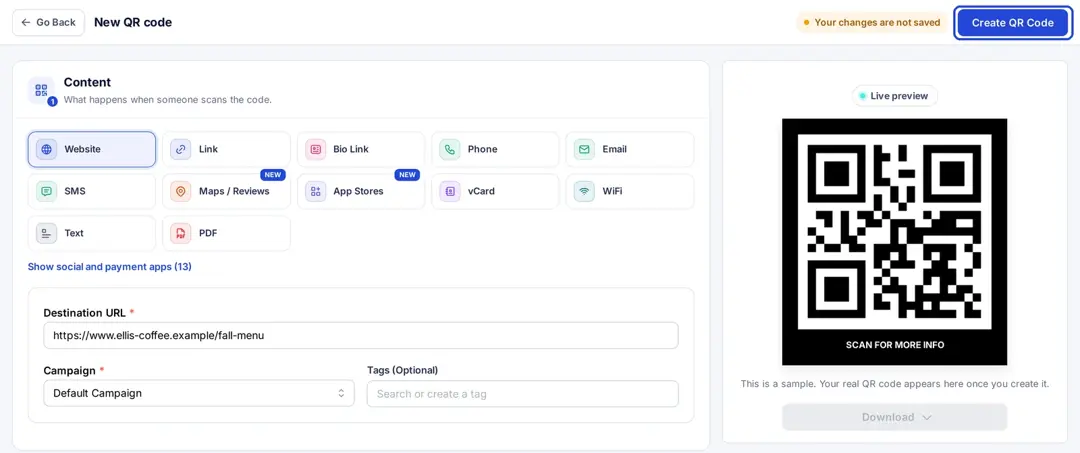
- Start a QR code: Click QR Codes in the left menu and then Create new. Pick the type (for an ad, usually Website), paste the landing page URL into Destination URL and choose a campaign.
- Design it: Change the pattern and colors, add a frame with a short call to action such as “Scan for 20% off” and, on Scale and Agency, your logo. The live preview updates as you go. Then click Create QR Code.
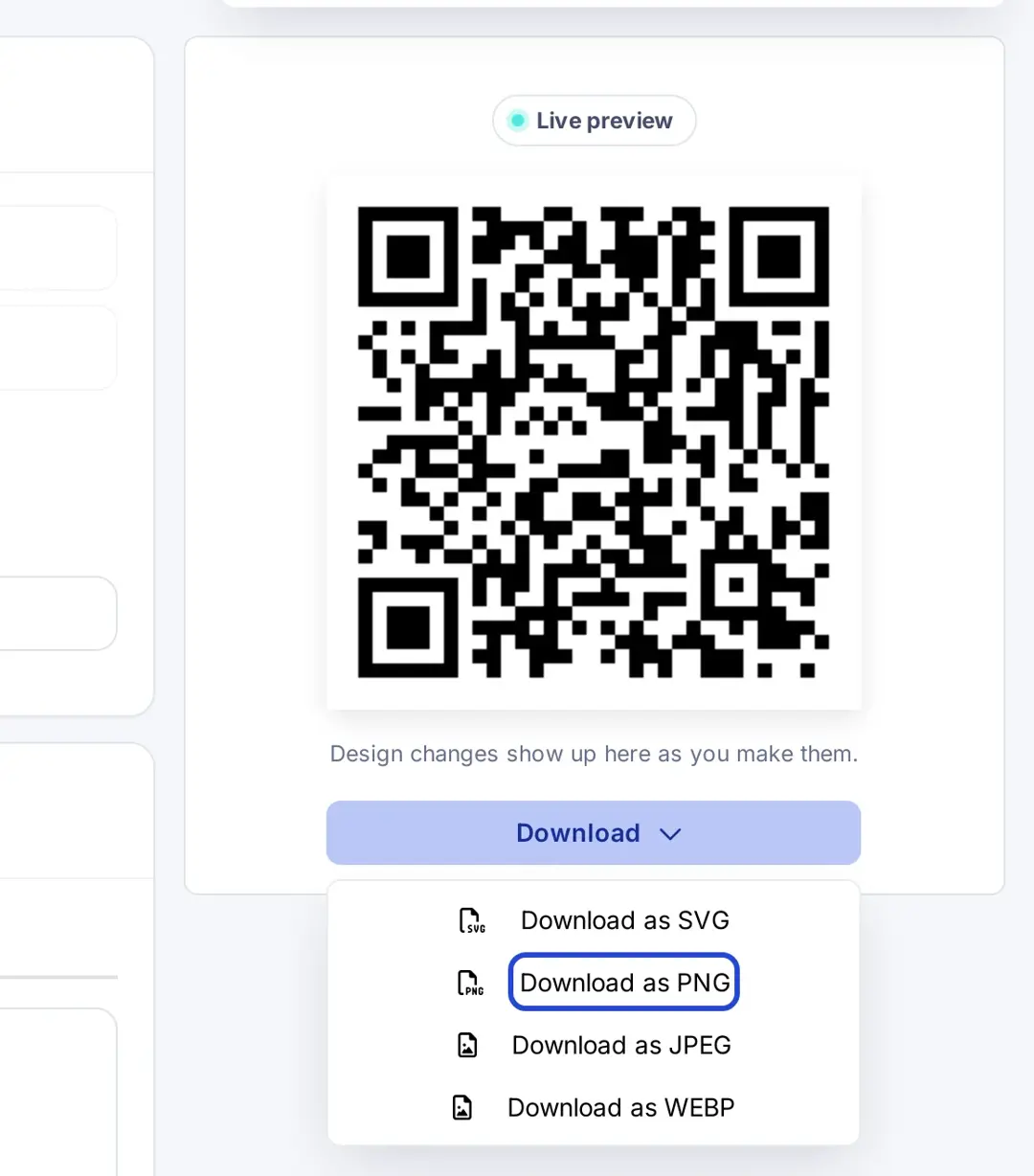
- Download and share: Open the Download menu and save the code as SVG for print or PNG for screens, then add it to your ad.
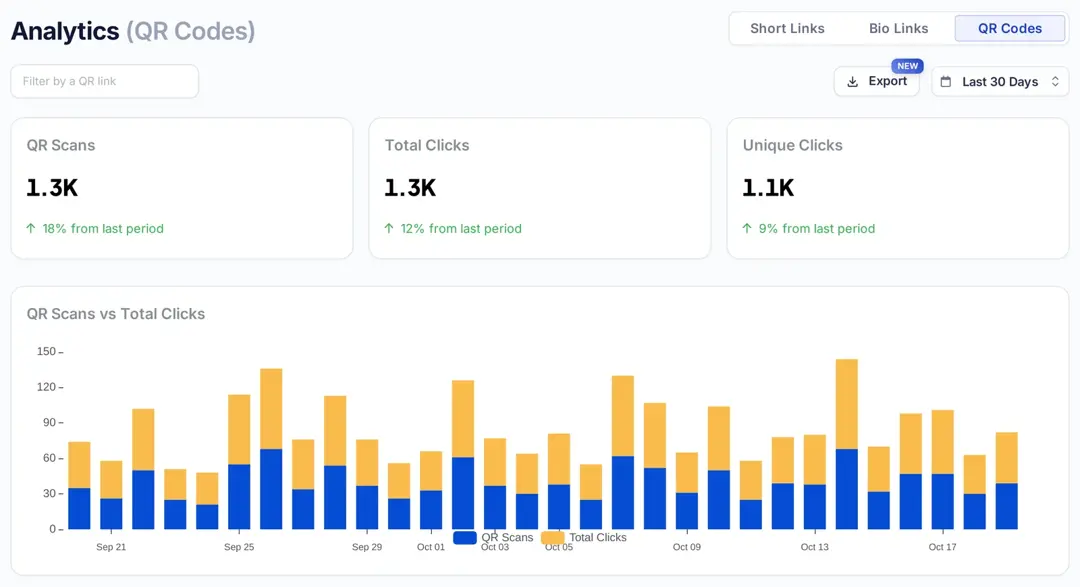
- Track performance: Go to Analytics and open the QR Codes tab to see scans by day, location, device and browser.
How to measure a QR code ad
A QR code can only be measured if it runs through a link you control. A dynamic code holds a short link; each scan opens that link, gets counted and is then sent on to your page. Our guide to QR code tracking explains what is logged and what isn’t. For ads, set it up like this:
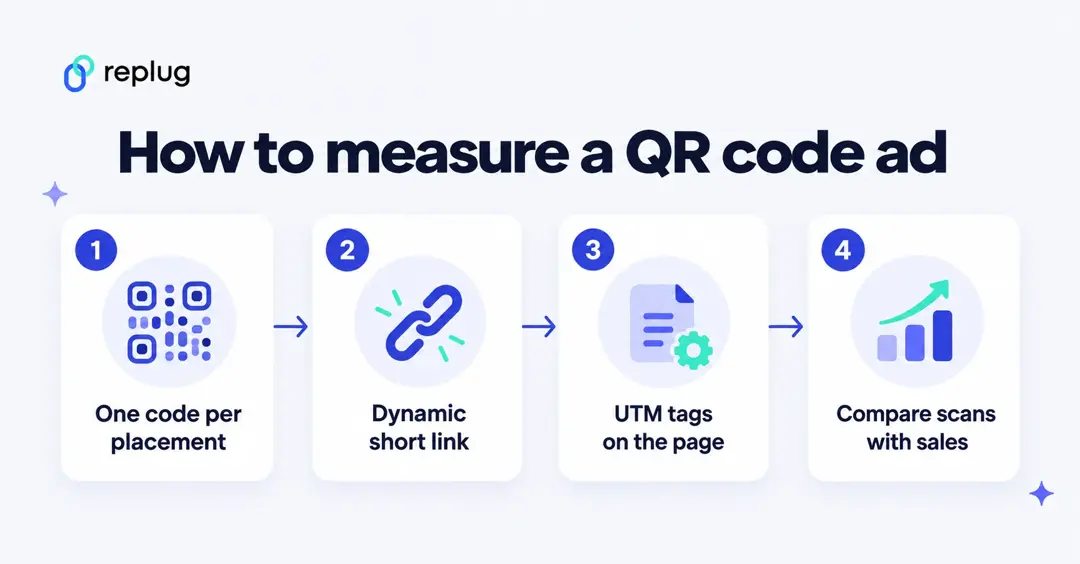
- One code per placement. Give each magazine, billboard location, TV spot or mail drop its own code, so the numbers tell you which placement worked.
- A dynamic short link behind every code. You can fix a typo or move the page after the ad has gone to print.
- UTM tags on the destination URL. They carry the placement into Google Analytics, so you can see what people did after the scan.
- Compare scans with results. Put scans next to sign-ups, coupon redemptions or sales for the same period, not just next to each other.
According to Google Analytics Help, utm_source, utm_medium and utm_campaign identify where a visit came from. A destination URL for a billboard code could look like this:
https://www.ellis-coffee.example/fall?utm_source=billboard_i35&utm_medium=qr&utm_campaign=fall_2026Mistakes that waste a QR code ad
- No reason to scan. Say what people get (“Scan for the menu”, “Scan for 20% off”) next to the code.
- A desktop page behind the code. Every scan happens on a phone, so the page has to load fast and work on a small screen.
- A code too small for the distance. Size it for where people will stand; our QR code size guide covers sizes by medium.
- A static code with a URL that will change. Once printed, a static code can’t be pointed somewhere else.
- An address people don’t trust. The FBI advises people to check the web address after scanning a QR code before entering any information (FBI IC3 public service announcement). A short link on your own branded domain makes that check easy.
3 tips to make high-quality QR codes instantly
Here are 3 top tips every marketer should follow when creating a QR code.
- Use a reliable QR code generator: Opt for reputable QR code generators that offer high-resolution codes and customization options. This ensures that your QR code is scannable and visually appealing.
- Optimize your QR codes: Ensure that the URL linked to your QR code is optimized for mobile devices. A mobile-friendly page will enhance user experience and increase the likelihood of engagement.
- Test your QR code links before deploying: Before launching your advertising campaign, test different QR code links to see which one performs best.
Additionally, A/B testing multiple QR codes can provide insights into which offers or content resonate more with your audience.
Also read: Why is my QR code blurry & how can I fix it?
Final verdict
In summary, QR code advertising represents a dynamic shift in the marketing landscape, seamlessly linking the physical and digital realms. This innovative approach not only enhances customer engagement but also provides brands with critical data to refine their strategies.
Frequently asked questions

Manahil